
You’ve spent months in physical therapy. The injections wore off weeks ago. Your pain medications aren’t cutting it anymore, and you’re starting to wonder if surgery is the only option left. But every surgeon you’ve consulted recommends something different, and the word “fusion” keeps coming up in ways that make you nervous.
After over 30 years performing spine surgery and completing more than 2,700 Deuk Laser Disc Repair® procedures with a 0.01% complication rate and 0% infection rate, I can tell you that not every patient with back pain is a laser spine surgery candidate. And that’s a good thing. Careful patient selection is the single most important factor in surgical outcomes. When the right patient receives the right procedure for the right diagnosis, the results speak for themselves. When any of those three elements are wrong, outcomes suffer regardless of the surgeon’s skill.
Here’s how we determine whether you’re a candidate for endoscopic laser spine surgery, and why that determination matters more than the surgery itself.
Why Patient Selection Determines Everything
Poor outcomes in spine surgery are attributed primarily to misdiagnosis or incorrect procedure selection. A technically perfect surgery on the wrong structure produces zero benefit. This is why laser spine surgery mills that operate on nearly everyone who walks through the door have earned justified criticism. Volume without selectivity produces inconsistent results and damaged trust.

At Deuk Spine Institute, we turn away patients who won’t benefit from our procedures. That selectivity is what produces an average of 99% pain relief for treated pain sources across over 2,700 Deuk Laser Disc Repair® procedures. Outcomes apply when the diagnosed pain source matches the treated pathology. When the diagnosis is wrong or incomplete, no surgery will deliver full relief.
This is also why approximately 99% of chronic pain treatments fail. They address symptoms rather than structural causes. Medications suppress inflammation temporarily. Injections mask pain signals. Physical therapy strengthens surrounding muscles without repairing structural damage.
Clinical Indicator #1: Continued Symptoms Despite Conservative Care
The first qualification for laser spine surgery candidacy is failure of appropriate conservative treatment. Conservative care, including physical therapy, anti-inflammatory medications, and epidural injections, is reasonable for acute pain lasting less than 6 to 12 weeks. Some minor disc injuries stabilize during this window as acute inflammation resolves.
But conservative care cannot repair structural damage. Disc injuries do not heal on their own. Physical therapy strengthens muscles and improves flexibility, but it cannot fix a torn annulus fibrosus. Injections suppress inflammation temporarily without removing the herniated nucleus pulposus material, perpetuating the cycle. Pain medications block signals without addressing the source. When structural disc damage exists, these treatments provide temporary relief at best.
You become a stronger surgical candidate when:
- Pain persists beyond 12 weeks of consistent conservative treatment without meaningful improvement
- Symptoms return or worsen after injections wear off, indicating the structural source remains active
- Progressive worsening occurs despite full compliance with physical therapy and prescribed treatment
- Functional limitations continue affecting work, sleep, or daily activities at an unacceptable level
Chronic back pain is defined as pain lasting on and off for more than two weeks. If your pain has persisted for months or years, continuing conservative care that has already failed simply delays definitive treatment while neoinnervation – the growth of new pain nerve fibers into damaged tissue – makes the condition progressively worse.
Clinical Indicator #2: Radicular Symptoms Consistent With Nerve Irritation
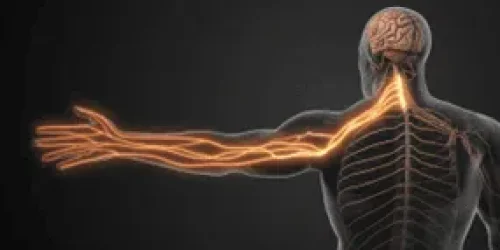
Radicular symptoms are a strong indicator for endoscopic candidacy because they point to a specific, treatable structural problem. Radicular pain presents as a sharp, shooting, or electric-like sensation that radiates along a specific nerve path called a dermatome. In the lumbar spine, this typically means pain traveling down the leg (sciatica). In the cervical spine, it radiates into the arm, forearm, or hand.
A critical distinction that many physicians miss: radicular pain is primarily driven by chemical inflammation of the nerve root, not just mechanical compression. When herniated nucleus pulposus material irritates a nerve, the chemical inflammatory response generates those shooting, burning symptoms. Traditional surgeries like microdiscectomy remove herniated material but leave the annular tear untreated, which is why back pain often persists after these procedures.

It’s equally important to understand what radicular symptoms tell us about back pain itself. Nerve compression causes leg or arm symptoms. It does not cause back pain. If you have both back pain and radiating leg pain, you have two separate problems requiring different evaluations. The back pain originates from a disc injury (inflammation from a posterior annular tear), while the leg pain comes from nerve irritation. Both must be addressed for complete relief.
Clinical Indicator #3: Pain Source Matches a Treatable Condition
This is where most spine practices fall short. Identifying that you have a disc herniation is only part of the equation. The herniation must be confirmed as the actual source of your specific pain, and every contributing pain generator must be identified. Most surgeons are not trained during residency to identify and treat painful disc issues like annular tears. Their training focuses on decompression for spinal stenosis, fractures, tumors, infections, and deformity surgery.
The average patient with chronic back pain has 5 pain generators contributing to their symptoms simultaneously. A patient might have disc injuries at L4-L5 and L5-S1, facet joint arthritis at both levels, and sacroiliac joint dysfunction. All five of those pain generators must be properly treated to completely eliminate pain. Successfully treating one or two generators while leaving others untreated produces partial relief at best.
This multi-source reality explains why patients undergo surgery, experience some improvement, but still have significant residual pain. The surgery may have been technically successful for the structure it addressed, but untreated generators continue producing symptoms. Successful treatment of one pain generator will not fix other untreated generators.
Through clinical practice across more than 250,000 patients and over 100,000 procedures since 2004, I’ve identified 30 structurally identifiable sources of chronic back and neck pain falling into five major categories:
- Disc injuries (approximately 85% of cases) – the most common cause, treated with Deuk Laser Disc Repair®
- Facet joint arthritis (approximately 5% of cases) – small weight-bearing joints behind the discs, treated with Deuk Plasma Rhizotomy®
- Sacroiliac joint pain (approximately 5% of cases) – inflammation or arthritis in the SI joint, treated with Deuk Plasma Rhizotomy®
- Piriformis syndrome (approximately 5% of cases) – chronic muscle inflammation causing persistent pain, treated with Deuk Piriformis Release®
- Vertebral fractures (less than 0.5% of cases) – typically treated with kyphoplasty or vertebroplasty
Over 95% of chronic back and neck pain can be treated with Deuk Laser Disc Repair® and Deuk Plasma Rhizotomy® combined. Deuk Spine Institute can diagnose and treat 99% of common chronic back and neck pain when all pain generators are properly identified and addressed.
MRI imaging provides essential anatomical information, but it is not a diagnosis on its own. An MRI is a picture of anatomy. It never tells you where pain comes from.
Research shows that 100% of people over age 45 have disc herniations visible on MRI, with or without symptoms, and only 10-15% of those herniations actually cause pain.
The Deuk Spine Exam® combines MRI review, symptom pattern analysis, and physical examination to achieve 99% diagnostic accuracy, identifying which structural findings are actually generating your pain versus which are incidental. Over 3,000 free MRI reviews have been completed through this process, with Dr. Deukmedjian personally evaluating each one.
Clinical Indicator #4: No Contraindications to Endoscopic Approach
Disc injuries, facet joint arthritis, sacroiliac joint pain, and piriformis syndrome are all treatable through minimally invasive endoscopic procedures at Deuk Spine Institute. The vast majority of patients with chronic back and neck pain qualify for these motion-preserving approaches.

A smaller subset of conditions falls outside the scope of endoscopic laser repair and requires different surgical approaches:
- Spinal tumors or infections that need open surgical access for complete treatment and tissue removal
- Unhealed vertebral fractures with significant collapse requiring vertebral body augmentation, such as kyphoplasty or vertebroplasty
- Severe spinal instability where vertebrae shift significantly relative to each other and require stabilization procedures
- Major spinal deformity such as significant scoliosis, requiring structural correction
These represent a small percentage of chronic pain patients. If your pain originates from disc injuries, facet arthritis, SI joint dysfunction, or piriformis syndrome, you are very likely a candidate for same-day outpatient procedures that preserve spinal motion and avoid the long recovery of traditional fusion surgery.
Why Traditional Surgery Often Creates New Problems
Understanding why you might be a candidate for endoscopic repair requires understanding what traditional surgery does to your spine. Laminectomy, discectomy, and fusion commonly involve the removal of bone, the use of permanent hardware, and longer recovery periods. These procedures cause internal scar tissue formation, bone and ligament destruction, and can lead to Failed Back Surgery Syndrome.
Fusion surgery eliminates motion at the treated segment. This transfers increased stress to neighboring levels, accelerating their degeneration through adjacent segment disease, often requiring additional surgeries. Traditional surgery also always requires opioid narcotic pain medications post-operatively, carrying significant risks of addiction, abuse, and overdose. Traditional invasive spine surgery complication rates range from 5% to over 50%, depending on the procedure.
Endoscopic laser procedures avoid all of these problems. There is no bone removal, no hardware implantation, and no destruction of ligaments or muscles. The procedures are motion-preserving, meaning spinal fusion is not necessary. Incisions are bandaid-sized, smaller than a dime (7mm lumbar, 4mm cervical), and no opioid narcotics are needed post-operatively because there is minimal internal trauma.
What the Evaluation Process Looks Like
The Deuk Spine Exam® correlates three elements that must align before any surgical recommendation. Your symptom history reveals which structures are likely involved. Physical examination confirms which structures are generating symptoms by reproducing or relieving your pain through specific movements. Imaging correlation verifies that MRI findings match the clinical picture. A herniation visible on imaging that doesn’t correspond to your symptoms is likely incidental. Operating on incidental findings is a primary cause of failed spine surgery.

When all three elements align, the diagnosis achieves 99% accuracy. Treatment recommendations match each identified pain generator with the specific procedure designed to address it.
After Candidacy Is Confirmed
Once evaluation confirms you’re a candidate, the treatment plan addresses every identified pain generator.
Deuk Laser Disc Repair® treats disc injuries through a 7mm lumbar or 4mm cervical incision – bandaid-sized, smaller than a dime – removing inflammatory tissue from the posterior annular tear and performing debridement. The tear heals naturally over 9 to 12 months without cadaver bone, metal, or plastic. The procedure takes approximately 20 minutes per disc under local anesthesia with light sedation. Patients walk shortly after with immediate pain relief commonly reported, return to normal activity within 24 hours with minor restrictions, and require no opioid narcotics.
Deuk Plasma Rhizotomy® treats facet joint arthritis and sacroiliac joint pain in a 30-minute outpatient procedure, permanently eliminating pain signals from the affected joint. Over 1,000 Deuk Plasma Rhizotomy® procedures have been performed.
Deuk Piriformis Release® addresses piriformis syndrome through a 4mm incision under twilight sedation, permanently releasing scar tissue from chronic inflammation.
All procedures are outpatient with same-day discharge. External incision healing occurs within 3 days while internal disc and nerve healing continues for months.
Your Next Step
If conservative care has failed and your symptoms match the clinical indicators above, start with an accurate diagnosis. Approximately 90% of Deuk Spine Institute patients travel from other states or countries because few local surgeons have equivalent endoscopic training, procedure volume, or published outcomes. Deuk Spine Institute offers a free MRI review where Dr. Deukmedjian personally evaluates your imaging to determine whether your pain has treatable structural causes.
The difference between a successful outcome and a failed one starts with candidacy. Get the diagnosis right, identify every pain generator, match each to the correct treatment, and the results follow.
This content is provided for educational purposes. Individual results vary. Consult with a qualified spine specialist to determine the appropriate treatment for your specific condition.