
Your neck has been hurting for months. Maybe years. You’ve done the physical therapy, sat through the injections, swallowed the medications, and followed every recommendation your doctors gave you. And your chronic neck pain is still there. Every morning. Every evening. Sometimes waking you at 3 AM when you roll the wrong way on your pillow.
After over 30 years performing spine surgery and treating more than 250,000 patients, I can tell you something most spine specialists won’t. Roughly 99% of chronic neck pain treatments fail because they target symptoms instead of the actual structural damage causing the pain. Physical therapy, chiropractic adjustments, pain medications, and epidural injections cannot repair the torn disc tissue that drives most chronic neck pain. They were never designed to.
This article explains exactly why conventional treatments fall short for lasting chronic neck pain relief, what is actually happening inside your cervical spine, and how imaging-driven treatment of the underlying disc injury produces the long-term results that years of symptom management never could.
What Most Doctors Miss About Chronic Neck Pain
Let me be direct. Chronic neck pain is neck pain that persists on and off for more than two weeks. If that describes you, here is what you need to understand.
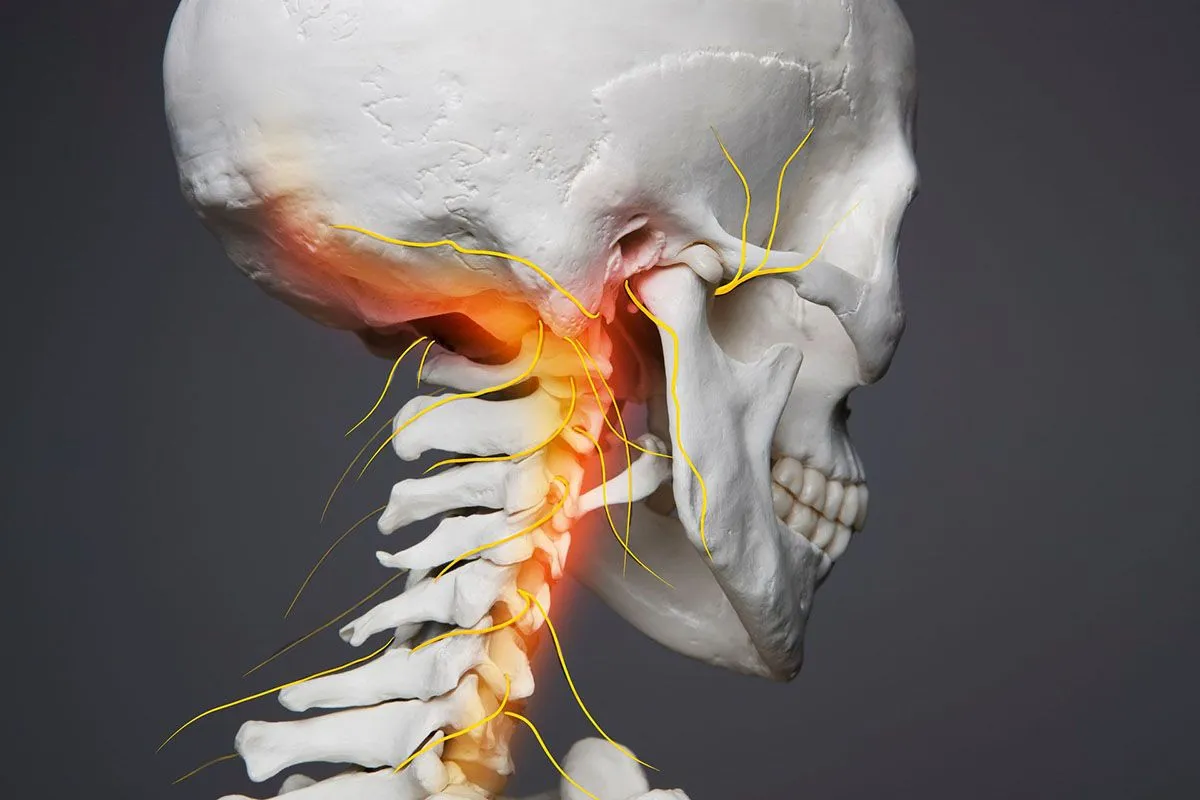
Through clinical practice and diagnostic refinement across thousands of patients, I have identified 30 very specific, structurally identifiable sources of chronic neck and back pain. They are not equally common. In the cervical spine, the most frequent cause of chronic neck pain is a disc injury. Specifically, a tear in the posterior annulus fibrosus of one or more cervical discs.
But here is the part that changes everything. The average chronic pain patient does not have one pain source. They have five pain generators contributing to their overall symptoms. They might have a disc injury at C5-C6, facet arthritis at C5-C6 and C6-C7, and upper facet inflammation at C4-C5. Each structure contributes pain signals. This is why single-source treatments almost always provide incomplete relief. They address one pain generator while leaving four others untreated.
Most spine surgeons were never trained to identify all of these pain generators. During residency, the main things surgeons learn are decompression for spinal stenosis, treating spinal fractures and instability, tumors, infections, and some degenerative deformity surgery. They are not trained to identify and treat painful disc issues like annular tears. Board certification alone does not indicate specialized spine expertise, high procedure volumes, or advanced training in identifying pain generators. It only indicates completion of residency and passing exams.
Why Conservative Treatments Cannot Correct Disc Injuries
I respect the role of conservative care. Physical therapy builds strength around an injured spine. Chiropractic care can improve joint mobility. Pain medications reduce the sensation of pain temporarily. The standard recommendation is to try conservative treatment for 6 to 12 weeks before considering surgical options. But here is what none of these treatments can do.
None of them can repair a torn annulus fibrosus. None of them can remove the herniated nucleus pulposus material trapped inside that tear. And none of them can stop the chronic inflammatory cascade that drives ongoing pain once neoinnervation has developed.
Consider what happens with each common treatment approach.
Physical therapy strengthens muscles around the cervical spine but cannot reach or repair the internal disc tear causing inflammation. When significant structural pathology exists, strengthening alone does not eliminate the pain source.
Chiropractic adjustments improve joint mobility and may provide temporary relief from stiffness, but manipulation cannot close an annular tear or remove inflammatory tissue from inside a damaged disc.
Pain medications block pain signals chemically. Anti-inflammatories reduce inflammation temporarily. But the moment you stop taking them, the structural problem is still there, still inflamed, still generating pain.
Epidural steroid injections deliver anti-inflammatory medication near the pain source. They can provide weeks or sometimes months of reduced symptoms. But injections never cure chronic neck pain. The relief is temporary because the injection does not repair the disc.
Muscle relaxants and nerve blockers address secondary symptoms like muscle spasm and nerve irritation without touching the primary structural cause driving those symptoms in the first place.
The average neck pain patient spends approximately $100,000 in medical bills cycling through these treatments over years before finding a solution that addresses the actual problem. That figure includes office visits, imaging, medications, injections, physical therapy sessions, chiropractic visits, and lost productivity. It is a staggering cost for treatments that were never capable of fixing the underlying disc injury.
Why an MRI Alone Will Never Diagnose Your Neck Pain
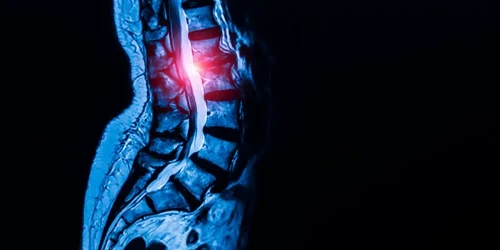
Here is something most patients do not realize. An MRI is a picture of anatomy. It is not a diagnosis of pain. MRIs never tell you where the pain comes from.
100% of people over age 45 have disc herniations visible on MRI, whether they have neck pain or not. Only 10 to 15% of those disc herniations actually cause pain. The remaining 85 to 90% are incidental findings that produce no symptoms at all.
This creates a serious diagnostic problem. MRI rarely identifies inflammation in the posterior annular fibers or distinguishes which disc herniation is causing pain versus which is incidental. Annular tears are not typically seen on a standard MRI. And what actually causes pain is when the nucleus pulposus herniates into the annular tear, creating a disc bulge. But radiologists miss seeing these disc bulges from annular tears more than 50% of the time on MRI.
So if your doctor looked at your MRI, pointed to a disc herniation, and said, “That’s your problem,” there is a significant chance they pointed at something that is not causing your pain at all. And the actual pain source was either missed entirely or never looked for in the first place.
The Deuk Spine Exam® Achieves 99% Diagnostic Accuracy
The Deuk Spine Exam® is a three-part evaluation that combines a focused physical examination, pain history analysis, and MRI correlation to identify every structural source of pain. This combined approach achieves 99% diagnostic accuracy, which is critical because treating the wrong structure accomplishes nothing.
Over 10,000 Deuk Spine Exam® evaluations have been performed, and they can be completed virtually over video conference in approximately 10 minutes with specific movement testing. This matters because roughly 90% of our patients travel from other states or countries due to a lack of local surgeons with equivalent endoscopic training, volume, or published outcomes.

The exam systematically tests for all five major pain generators in every patient. Which disc levels have symptomatic annular tears? Which facet joints show inflammation? Is there SI joint dysfunction? Is leg or arm pain coming from true nerve compression or from nerve irritation secondary to disc inflammation? The answer is usually “yes” to multiple questions. And the treatment plan must address every symptomatic structure, not just the most obvious abnormality on imaging.
The Real Source of Chronic Neck Pain Is a Disc Injury
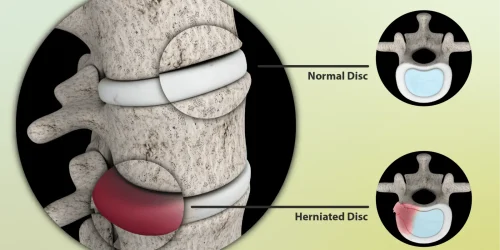
annulus fibrosus and a soft inner core called the nucleus pulposus. When the annulus tears, nucleus pulposus material pushes into that tear. This is what creates the pain.
Annular tears alone do not cause symptoms. The pain begins when herniated nucleus pulposus becomes trapped in the posterior annular tear, triggering inflammation that does not resolve on its own. That inflammation is the primary driver of chronic neck pain.
Over time, chronic inflammation leads to progressively worsening neck pain as the inflammatory process continues unchecked and new pain nerve fibers grow into the damaged tissue through a process called neoinnervation.
Radicular Symptoms Are a Separate Condition
Disc injuries can also produce radicular symptoms in the arms. These present as four distinct types of arm symptoms:
- Pain down the arm that radiates along a specific cervical dermatome in a sudden, shooting, or electric-like pattern
- Numbness in the arm or hand following the affected nerve pathway
- Pins and needles sensations (paresthesia) in the arm, hand, or fingers
- Weakness in the arm affecting grip strength or specific muscle groups
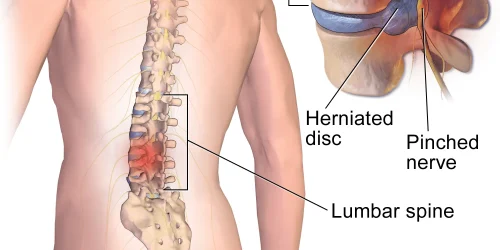
Arm pain and these radicular symptoms are driven primarily by chemical nerve inflammation from the disc injury, not by mechanical compression of the nerve. This is an important distinction that many patients and even some doctors confuse.
Neck pain and arm pain are separate conditions that may both be caused by the same disc injury, but they require separate evaluation. The neck pain itself comes from the disc injury and inflammation within the annular tear. The arm symptoms come from chemical irritation of a nearby nerve root. Getting this distinction right is fundamental to proper diagnosis and effective treatment.
The Only Treatment That Addresses the Disc Tear Directly
Once you understand that the pain comes from inflammation within a torn annular wall because of a herniated nucleus pulposus trapped in that tear, the treatment logic becomes clear. An effective procedure must accomplish specific goals to produce lasting results:
- Remove the inflammatory tissue from the posterior annular tear
- Remove the herniated nucleus pulposus material trapped within the tear
- Allow the annulus to heal naturally over 9 to 12 months without cadaver bone, metal hardware, or plastic spacers
- Preserve cervical spine motion and stability without eliminating movement at the treated segment
- Avoid fusion or any procedure that permanently eliminates motion
- Be minimally invasive with a small incision, an outpatient setting, and a rapid return to activity
That is what Deuk Laser Disc Repair® does. This is the only procedure specifically designed to target annular tear inflammation in the cervical and lumbar spine. During the procedure, a 4mm incision in the cervical spine provides access to the damaged disc through an endoscopic approach. Using laser technology, I remove the inflammatory tissue from within the posterior annular tear, extract the herniated nucleus pulposus material trapped in that tear, and debride the damaged tissue. The annulus then heals naturally over 9 to 12 months.
The procedure takes approximately 20 minutes per disc. Patients sit, stand, and walk shortly after. They go home the same day. No hospital stay. No general anesthesia required. No opioid narcotics prescribed, because there was minimal to no internal trauma from the procedure. Most patients return to work within 3 days with lifting restrictions.
Peer-reviewed publications report outcomes of 99% pain elimination for Deuk Laser Disc Repair®, with outcomes applying when the diagnosed pain source matches the treated pathology. Over 2,700 Deuk Laser Disc Repair® procedures have been performed with a 0.01% complication rate, zero infections, zero spinal fluid leaks, zero nerve injuries, and zero emergency reoperations.
Why This Approach Succeeds Where Others Fail
Traditional spine surgery for neck pain often involves cervical fusion, anterior cervical discectomy and fusion (ACDF), or artificial disc replacement. These procedures require a 3-inch incision, bone removal, general anesthesia, a 3 to 5 day hospital stay, and 6 to 12 months of recovery. Traditional surgery always prescribes opioid narcotic medications that carry a high potential for addiction, abuse, or overdose. And these procedures fundamentally change the biomechanics of your cervical spine.
Industry-wide traditional spine surgery complication rates range from 5 to 50%, including infection at 1 to 3%, dural tears at 2 to 8%, nerve injury at 1 to 2%, and reoperation at 10 to 15% within five years.
Fusion eliminates motion at the treated segment. This places additional stress on the discs above and below the fusion, accelerating degeneration at those levels through adjacent segment disease. Many fusion patients end up needing additional surgeries within 5 to 10 years.
Deuk Laser Disc Repair® preserves the disc. Preserves motion. Preserves spinal stability. No bone drilling. No hardware implantation. A 4mm incision versus a 3-inch incision. Same-day outpatient versus a 3 to 5 day hospital stay. Return to work in 3 days versus 6 to 12 months of recovery. No opioid narcotics versus mandatory narcotic prescriptions.
What Happens Without Proper Treatment
I want to be honest with you about this. Without treatment that directly addresses the structural source of chronic neck pain, the condition does not improve on its own. Disc tears do not heal naturally when herniated material remains trapped in the tear, perpetuating the inflammatory cycle. Neoinnervation continues. Pain nerve fibers continue growing into damaged tissue.

Without proper treatment, chronic neck pain lasts a lifetime. The pattern becomes familiar. Periods of relative stability are interrupted by flare-ups. Increasing reliance on medications. Repeated injection cycles. Progressive limitation of activities. Gradual acceptance that “this is just how life is now.”
It does not have to be that way. When every structural source of pain is identified through the Deuk Spine Exam® and treated directly, chronic neck pain can be eliminated permanently. Not managed. Eliminated.
Your Next Step Toward Real Relief
If you have been living with chronic neck pain and cycling through treatments that provide only temporary relief, the problem is not that you have not tried hard enough. The problem is that no one has identified and treated the actual source of your pain.
Deuk Spine Institute offers a free MRI review to determine whether your chronic neck pain is caused by a disc injury treatable with Deuk Laser Disc Repair®. Over 3,000 of these reviews have been completed. The Deuk Spine Exam® can be performed virtually over video conference, making it accessible regardless of where you live.
After over 30 years in spine surgery, completing 2,500+ cervical procedures and 3,000+ lumbar procedures, I have watched too many patients spend years and tens of thousands of dollars on treatments that cannot fix what is actually wrong. You deserve an accurate diagnosis that identifies every pain generator. You deserve a treatment that addresses the real problem. And you deserve to know that lasting chronic neck pain relief is possible when the right approach is used.
Request your free MRI review today. Let us determine whether we can help you get your life back.