
Your pain has gone on for months. Maybe years. You've done the physical therapy, taken the medications, sat through the injections, and followed every recommendation your doctor gave you. And still nothing has changed. You're still searching for the best treatment for a herniated disc because nothing so far has actually fixed the problem.
That failure isn't your fault. It's the limitation of treatments designed to manage symptoms rather than correct structural damage. After over 30 years performing spine surgery and completing more than 2,700 Deuk Laser Disc Repair® procedures, I can tell you exactly why those approaches fall short. The answer comes down to anatomy. A disc injury creates a structural tear in the outer wall of the disc called the annulus fibrosus, and that tear does not heal on its own.
What most patients don't realize is that herniated discs can occur in three distinct regions of the spine, and each location produces a different type of pain. A herniated disc in the lower back causes back pain. A herniated disc in the neck causes neck pain. A herniated disc in the thoracic spine causes mid-back pain. The location of the injury determines the location of the symptoms, and confusing these regions leads directly to misdiagnosis and failed treatment.
This article addresses all three regions separately so you understand what's actually happening in your spine, why standard care can't fix it, and what the right treatment looks like.
How Herniated Discs Cause Pain: The Mechanism That Matters
Before breaking down each region, you need to understand the structural mechanism driving your pain, because it's the same regardless of where the injured disc is located.
The disc has two parts. The tough outer ring is called the annulus fibrosus. The gel-like center is called the nucleus pulposus. When the outer ring tears, the inner material herniates into the tear. Chronic inflammation builds within that posterior annular tear, and pain originates from multiple sources:
- Inflammation in the posterior annular tear - The body's inflammatory response cannot resolve because the structural damage remains
- Mechanical stress on the posterior longitudinal ligament - Herniated material presses against this pain-sensitive structure
- Nucleus pulposus trapped within the tear - Perpetuates chronic inflammation and, over time, triggers neoinnervation, where small pain nerve fibers grow into the damaged area and worsen the pain progressively
A separate problem can also accompany disc injuries. When herniated material irritates or compresses a nerve root, it causes radicular symptoms: sharp, shooting, or electric-like pain that radiates along a specific nerve path. This radiating pain is primarily driven by chemical inflammation of the nerve root, not just mechanical compression. Nerve irritation causes these radiating symptoms, not the axial spine pain itself. Back pain and leg pain are two distinct conditions. Neck pain and arm pain are two distinct conditions. Each requires its own evaluation.
With that foundation in place, here is what a herniated disc looks like in each region of the spine.
Herniated Disc in the Lower Back
Disc injuries in the lumbar spine are the most common cause of chronic lower back pain, accounting for approximately 85% of cases based on my clinical experience across more than 250,000 patients treated at Deuk Spine Institute since 2004.
There are five discs in the lower lumbar spine. The most commonly injured levels are L4-L5, followed by L5-S1, then L3-L4, and L2-L3. These four levels account for the overwhelming majority of disc-related lower back pain.
One critical diagnostic point: 100% of people over age 45 have disc herniations visible on MRI, but only 10-15% of those herniations actually cause symptoms such as back pain or sciatica. An MRI is a picture of anatomy, not a diagnosis of pain. Radiologists miss disc bulges from annular tears more than 50% of the time on standard imaging. The Deuk Spine Exam® uses a combination of MRI review, physical examination, and symptom history to identify the specific disc causing pain with 99% diagnostic accuracy. Without that precision, treatments frequently target the wrong structure entirely.
When a lumbar disc herniation irritates a nerve root, it causes radiculitis: radiating leg pain driven primarily by chemical inflammation of the nerve. This is distinct from nerve compression, which causes weakness, numbness, or tingling in the leg. Both can occur together, but they are separate problems. And both are separate from the lower back pain itself. Nerve compression and nerve irritation cause leg symptoms. They do not cause back pain.
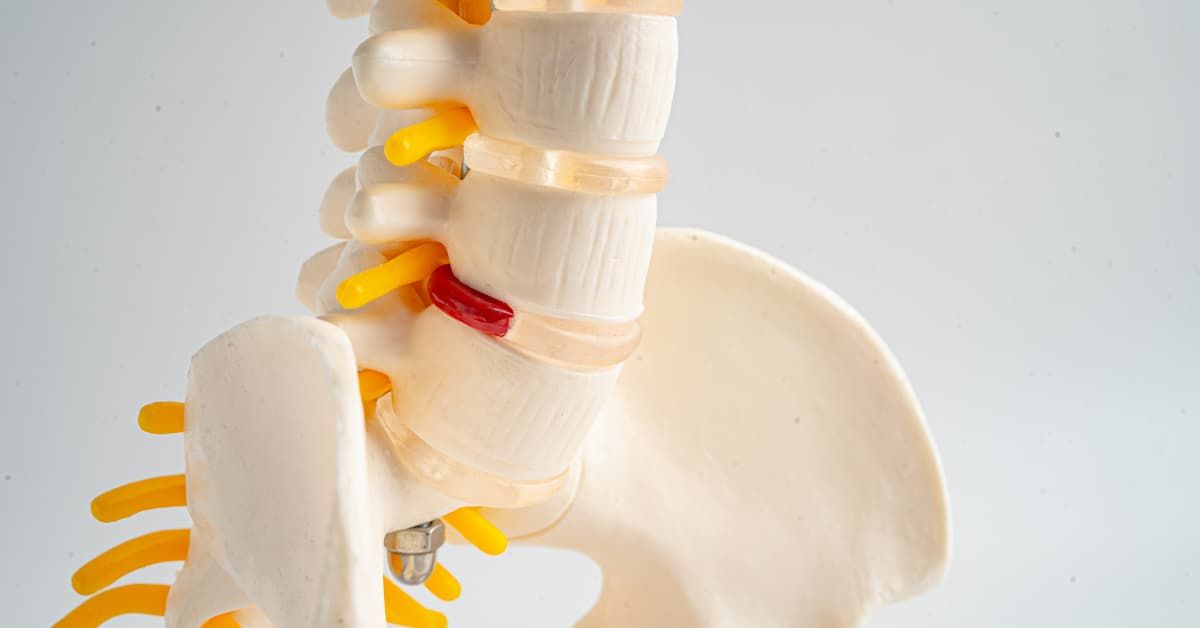
Effective treatment for a lumbar herniated disc must remove inflammatory tissue from within the posterior annular tear, remove the herniated nucleus pulposus material trapped there, and allow the annulus to heal naturally over 9-12 months, all without fusing the spine or eliminating motion. Deuk Laser Disc Repair® accomplishes this through a 7mm lumbar incision, smaller than a dime. The procedure takes approximately 20 minutes per disc, is performed outpatient under local anesthesia with light sedation, and patients walk within hours of surgery. No bone is drilled, no metal or plastic is inserted, and no cadaver tissue is used. In our clinical experience with over 2,700 procedures, patients report an average of 99% pain relief for treated pain sources, with a complication rate of only 0.01% and a 0% infection rate.
Herniated Disc in the Neck
A herniated disc in the cervical spine causes neck pain. Not lower back pain. Not mid-back pain. Neck pain. This distinction sounds obvious, but patients with cervical disc injuries frequently go months without an accurate diagnosis because their pain gets attributed to muscle tension, postural strain, stress, or headaches rather than the structural disc injury driving it.
The cervical spine has six discs running from the base of the skull to the top of the thoracic spine. The most commonly affected levels are C5-C6, followed by C6-C7, and then C4-C5, though any cervical disc can be injured.
One finding that surprises many patients: approximately two-thirds of patients with a painful cervical disc herniation also experience headaches in the back of their head. These are called cervicogenic headaches, and they originate from the disc injury itself. After Deuk Laser Disc Repair®, these headaches go away completely. Patients who have been treating recurring headaches for years without relief may actually have an undiagnosed cervical disc injury as the underlying cause.
Poor posture and muscle tightness in the neck are compensatory symptoms, not primary causes. The body instinctively shifts to avoid pain from the underlying disc injury, creating secondary muscle tension that draws clinical attention away from the structural source. Treating that secondary tension with massage, stretching, or postural correction provides temporary relief but leaves the annular tear completely unaddressed.
Cervical disc injuries produce several distinct types of symptoms beyond neck pain, and understanding the differences matters for proper diagnosis:
- Cervical radiculitis (nerve root irritation) - Inflammation of the nerve root causes arm pain radiating along a specific nerve path. This is driven by chemical inflammation, similar to how lumbar nerve irritation causes leg pain.
- Cervical radiculopathy (nerve root compression) - Physical compression of the nerve causes numbness or tingling in the hand and fingers, and arm weakness. Arm weakness is a particularly significant finding that warrants prompt specialist evaluation.
- Cervical myelopathy (spinal cord compression) - In more severe cases, disc herniation can compress the spinal cord itself, causing balance problems and urinary incontinence. This is a serious condition that requires timely treatment.
Deuk Laser Disc Repair® addresses cervical disc injuries through a 4mm incision with the same outpatient, motion-preserving approach used for the lumbar spine. No bone drilling, no fusion, no hardware. Many patients recommended for anterior cervical discectomy and fusion (ACDF) have a condition treatable with this approach instead. Fusion permanently eliminates motion at the treated segment and accelerates degeneration at adjacent levels. A second opinion before agreeing to cervical fusion is always worth pursuing.
Herniated Disc in the Thoracic Spine
Thoracic disc injuries are the most frequently overlooked category in spine care. When patients describe pain between the shoulder blades, wrapping around the rib cage, or deep in the middle of the back, they are often told it's muscular, postural, or referred pain from an internal organ. What many of them actually have is a herniated disc in the thoracic spine, and they spend years without an accurate diagnosis.
The thoracic spine has twelve vertebrae and eleven discs. It is the least mobile region of the spine because each thoracic vertebra connects to a pair of ribs, which significantly limits motion compared to the cervical or lumbar spine. Thoracic disc injuries are less common than lumbar or cervical injuries, but when they occur, the structural mechanism and treatment requirements are identical.
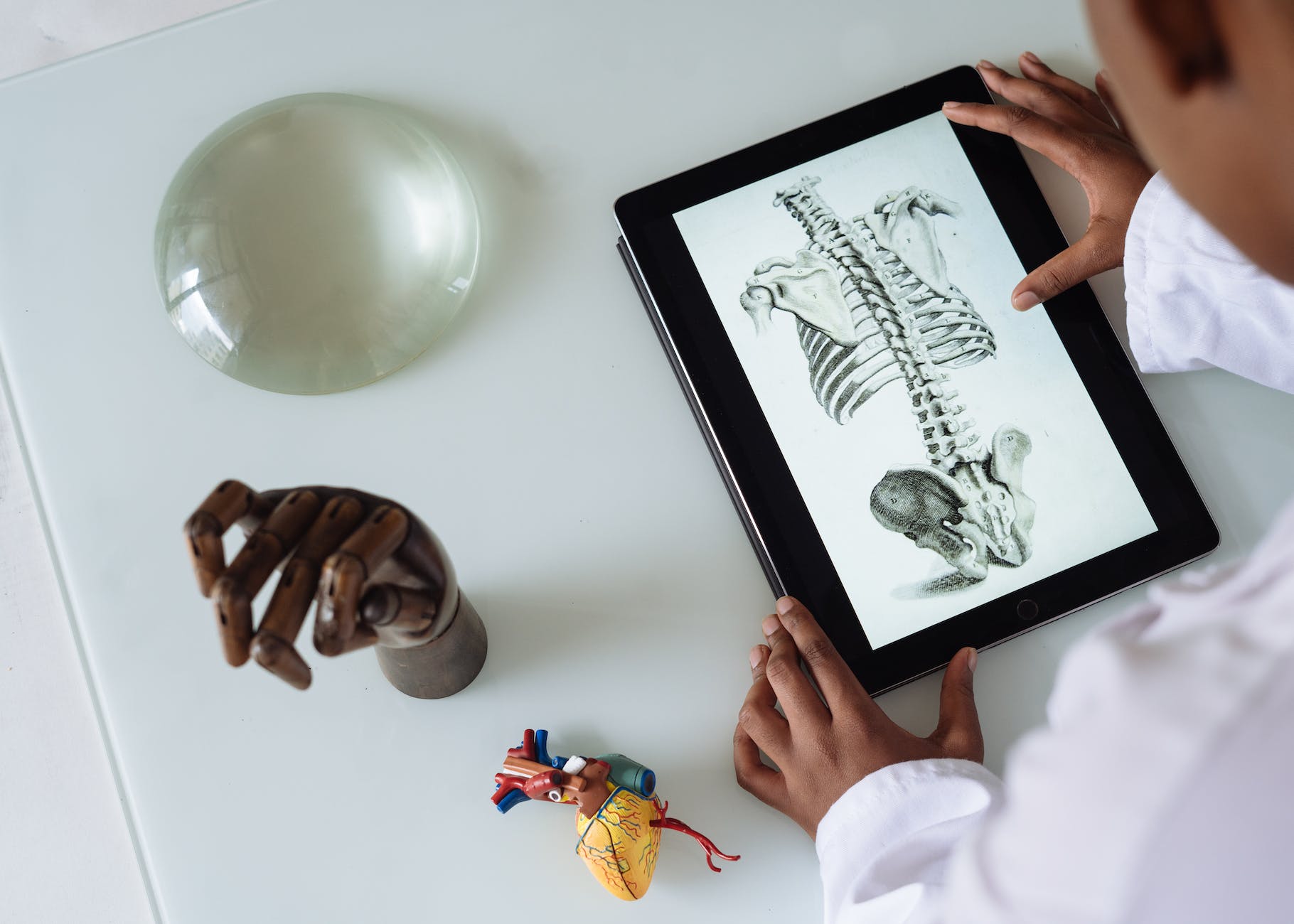
Several features make thoracic disc injuries easy to miss. The pain patterns are atypical and can resemble musculoskeletal strain, rib problems, or referred pain from the kidneys or gallbladder. Standard clinical training and imaging protocols focus heavily on the lumbar and cervical spine, leaving thoracic pathology underexamined. When a thoracic nerve root is irritated, the pain follows a band-like distribution radiating around the rib cage, which further complicates recognition.
The Deuk Spine Exam® closes this diagnostic gap. By combining MRI review, physical examination, and detailed symptom history, it identifies the specific thoracic disc generating the pain with 99% diagnostic accuracy. Mid-back pain that has been written off as muscular or stress-related without a clear structural explanation deserves a proper evaluation. Deuk Laser Disc Repair® applies to thoracic disc injuries with the same minimally invasive, motion-preserving approach used at lumbar and cervical levels.
Why Conservative Care Cannot Fix Any of These
Across all three regions, the limitations of conservative care are the same. Physical therapy, medications, and injections manage symptoms. None of them can repair a torn annulus fibrosus, remove herniated nucleus pulposus material from inside the tear, or stop the chronic inflammatory process perpetuating the pain.
Conservative care is appropriate for acute pain under six weeks, mild symptoms with minimal functional impact, and as part of a diagnostic process. A 6-12 week trial is standard for new-onset spine pain. But if your pain has persisted beyond that window, conservative care alone will not resolve it. Disc injuries do not heal on their own.
If any of the following apply, it's time for specialist evaluation:
- Pain lasting beyond 12 weeks despite consistent treatment
- Pain that worsens over time or limits daily function
- Radiating symptoms - leg pain from a lumbar disc, arm pain from a cervical disc, or band-like rib pain from a thoracic disc
- Injections that provided only temporary or no meaningful relief
- Recurrent severe episodes even after periods of improvement
- Inability to work, sleep, exercise, or perform normal daily activities
Take the Next Step Toward Real Relief
The best treatment for a herniated disc, whether in the lower back, neck, or thoracic spine, is the one that removes the structural source of your pain while preserving your spinal motion and stability. Not the one that temporarily dulls it.
Deuk Spine Institute offers a free MRI review with no obligation. Dr. Deukmedjian personally evaluates every MRI submitted to determine whether your pain has a treatable structural cause. Submit your MRI online or call us to find out whether Deuk Laser Disc Repair® can end your chronic spine pain.
This content is provided for educational purposes only. Individual results vary. Consult with a qualified spine specialist to determine the appropriate treatment for your specific condition.