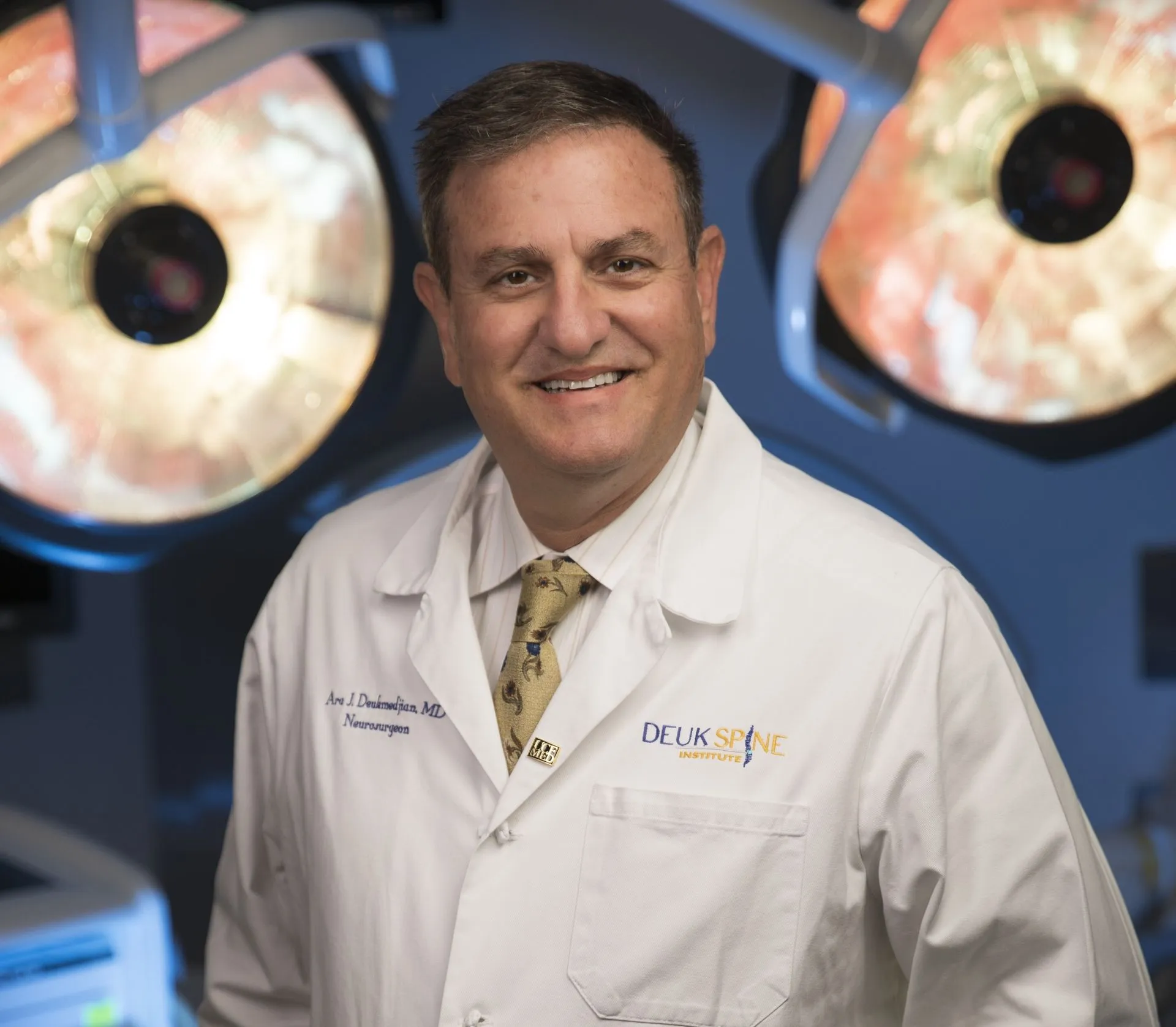
Medically Reviewed by: Ara Deukmedjian, MD
Board-Certified Neurosurgeon | Over 2,000 Minimally Invasive Spine Procedures Performed
Last Updated: January 2026
When chronic back or neck pain disrupts your life, choosing the right spine surgeon becomes one of the most important healthcare decisions you’ll ever make. With Florida home to some of the nation’s leading spine specialists and medical centers, patients have access to world-class care—but navigating your options requires understanding what truly matters for your specific condition.
This comprehensive guide examines Florida’s spine surgery landscape, explains how major hospital rankings work, and helps you identify the right specialist for your unique diagnosis.
Understanding Hospital Rankings and What They Really Mean
How U.S. News & World Report Evaluates Hospitals
U.S. News & World Report publishes the most widely cited hospital rankings in America, evaluating nearly 4,500 hospitals annually based on objective performance data.1 For the 2025-2026 rankings, their methodology relies heavily on Medicare claims data from the Centers for Medicare & Medicaid Services, analyzing outcomes for over 67 million Medicare beneficiaries.1
The ranking system weighs several factors:
- Outcomes (up to 75% of score): Risk-adjusted mortality rates, readmission rates, and discharge-to-home rates2
- Process measures: Adherence to best-practice protocols
- Structure: Hospital resources, technology, and nursing care quality
- Expert opinion: For select specialties where objective data is limited
Important Limitations of National Rankings
While these rankings provide valuable data, they have significant limitations that every patient should understand:
Medicare-only data: The rankings analyze primarily Medicare patients—those aged 65 and older or with long-term disabilities.3 This means the data excludes:
- Younger patients with private insurance
- Medicaid patients
- Patients at outpatient surgery centers
Focus on inpatient care: Rankings emphasize traditional hospital-based procedures, particularly spinal fusion surgeries performed on Medicare patients. They don’t capture outcomes from ambulatory surgery centers or outpatient facilities where many modern minimally invasive procedures are performed.4
Specialty attribution issues: A documented concern is that deaths may be attributed to specialties even when those specialists weren’t directly involved in the patient’s care, potentially skewing mortality data.5
Florida’s Top-Ranked Hospital Systems for Spine Care
Despite these limitations, hospital rankings do identify centers with consistently strong outcomes. Florida has an exceptional concentration of highly-rated spine centers:
U.S. News High-Performing Hospitals in Florida for Back Surgery (Spinal Fusion)6:
- Tampa General Hospital
- Mayo Clinic Jacksonville
- Cleveland Clinic Florida
- Multiple HCA Florida facilities
Healthgrades 2026 Spine Surgery Excellence Award Winners: Florida leads the nation with 20 hospitals recognized for superior patient outcomes in spinal fusion and back surgery.7 Notable Florida recipients include:
- St. Anthony’s Hospital (St. Petersburg)
- St. Joseph’s Hospital (Tampa)
- St. Mary’s Medical Center (Mangonia Park)
- HCA Florida Lake Monroe Hospital8
Why Outpatient Spine Specialists May Not Appear in Traditional Rankings
The Medicare Data Gap
Here’s what many patients don’t realize: if a surgeon primarily treats younger patients with private insurance through outpatient procedures, their excellent outcomes won’t appear in Medicare-based rankings at all.3
This creates a significant blind spot. As healthcare has shifted toward outpatient care—with procedures once requiring hospital stays now performed safely in ambulatory surgery centers—many highly skilled specialists operate outside the Medicare data ecosystem that feeds these rankings.
The Rise of Outpatient Spine Surgery
The field of spine surgery has undergone a dramatic transformation over the past decade. Procedures that once required 3-5 day hospital stays, general anesthesia, and lengthy recoveries can now be performed as outpatient procedures with:
- Local anesthesia with conscious sedation
- Same-day discharge
- Faster recovery times
- Lower infection rates
- Reduced costs
This shift represents a major advance in patient care, yet traditional hospital rankings haven’t fully adapted to capture these innovations.4
Alternative Quality Indicators
When evaluating surgeons who may not appear in hospital rankings, look for:
Board certification: Certification by the American Board of Neurological Surgery (ABNS) or American Board of Orthopaedic Surgery demonstrates rigorous training and ongoing education.9
Professional society memberships: Active involvement in organizations like the American Association of Neurological Surgeons (AANS), Congress of Neurological Surgeons (CNS), or North American Spine Society indicates commitment to advancing the field.
Patient recognition: Awards like Castle Connolly Top Doctors or Vitals Patients’ Choice reflect peer recognition and patient satisfaction.
Published success rates: Transparent reporting of complication rates, revision rates, and patient outcomes.
Specialized training: Fellowship training in spine surgery beyond residency demonstrates advanced expertise.
Essential Questions to Ask When Choosing a Spine Surgeon
1. What Is the Surgeon’s Experience with Your Specific Condition?
Experience matters profoundly in spine surgery. Research shows that patients undergoing high-risk surgeries with experienced surgeons have significantly fewer complications.10
Questions to ask:
- How many procedures like mine have you performed?
- What is your success rate for this specific procedure?
- What is your complication rate?
- How many of these procedures do you perform annually?
An experienced spine surgeon should have performed your specific procedure at least 30 times, ideally many more, with documented outcomes showing:
- High success rates (typically above 90% for common procedures)
- Low complication rates (below 5% for most elective procedures)
- Low revision rates (indicating durable results)
2. Is the Surgeon Board-Certified?
Board certification represents a voluntary commitment to excellence beyond minimum licensing requirements. For spine surgery, look for certification by:
American Board of Neurological Surgery (ABNS)9:
- Seven years of neurosurgical training
- Comprehensive written and oral examinations
- Ongoing continuing medical education requirements
- Recertification every 10 years
American Board of Orthopaedic Surgery (ABS)11:
- Five years of orthopedic residency training
- Rigorous written and oral examinations
- Continuous professional development
- Periodic recertification
While not legally required, board certification demonstrates a surgeon’s dedication to maintaining expertise and staying current with evolving techniques.
3. What Is the Surgeon’s Subspecialty Focus?
Spine surgery encompasses a broad range of conditions and techniques. Some surgeons focus on:
- Degenerative conditions: Herniated discs, spinal stenosis, degenerative disc disease
- Deformity correction: Scoliosis, kyphosis, complex spinal alignment issues
- Trauma: Spinal fractures and acute injuries
- Oncology: Spinal tumors and metastatic disease
- Pediatric conditions: Congenital spinal abnormalities, pediatric scoliosis
- Minimally invasive techniques: Endoscopic and laser procedures
- Revision surgery: Correcting failed previous surgeries
- Functional neurosurgery: Movement disorders, pain management
For optimal outcomes, seek a surgeon whose subspecialty aligns with your diagnosis. A surgeon who specializes in minimally invasive treatment of herniated discs will have different expertise than one focused on complex deformity correction or tumor removal.
4. Neurosurgeon vs. Orthopedic Surgeon: Does It Matter?
For spine surgery specifically, both neurosurgeons and orthopedic surgeons can be equally qualified—the key is subspecialty training in spine.12
Neurosurgeons train in:
- Brain and entire nervous system
- Microsurgical techniques
- Neural decompression
- Complex neurological conditions
Orthopedic surgeons train in:
- Musculoskeletal system
- Bone and joint disorders
- Spinal biomechanics
- Structural reconstruction
Many surgeons from both backgrounds complete additional fellowship training specifically in spine surgery, which provides the most relevant expertise regardless of their original specialty.
5. How Minimally Invasive Is the Recommended Procedure?
Surgical technique profoundly impacts recovery and outcomes. The spine surgery field has evolved dramatically:
Traditional Open Surgery:
- Large incisions (4-6 inches or more)
- Significant muscle dissection
- General anesthesia
- 2-5 day hospital stay
- 6-12 week recovery
- Higher infection risk
Minimally Invasive Surgery:
- Small incisions (under 1 inch)
- Muscle-sparing approach
- Often local anesthesia
- Same-day discharge possible
- 2-4 week recovery
- Lower infection risk
Questions to ask:
- What is the incision size?
- Will muscles be cut or just spread apart?
- What type of anesthesia is used?
- What is the expected hospital stay?
- What is the typical recovery timeline?
- Will hardware (screws, rods, cages) be implanted?
6. What Are the Alternatives to Surgery?
A trustworthy surgeon thoroughly explores conservative treatments before recommending surgery. These may include:
- Physical therapy and targeted exercise programs
- Anti-inflammatory medications
- Epidural steroid injections
- Nerve blocks
- Spinal cord stimulation
- Lifestyle modifications
If a surgeon recommends immediate surgery without discussing non-surgical options or seems dismissive of conservative care, seek a second opinion.
7. What Are Your Complication and Revision Rates?
Transparency about outcomes is crucial. Ask specifically about:
- Infection rates: Should be below 1-2% for most elective procedures
- Nerve injury rates: Should be well below 1%
- Reoperation rates: What percentage of patients require additional surgery?
- Patient satisfaction: What percentage of patients report significant improvement?
Be cautious of surgeons who can’t or won’t provide specific data about their outcomes.
8. What Does Recovery Look Like?
Understanding the recovery process helps set realistic expectations:
- When can I return to work?
- When can I drive?
- What activities are restricted and for how long?
- What does post-operative pain management involve?
- What are the signs of complications I should watch for?
- How often will I have follow-up appointments?
Florida’s Top Spine Surgeons by Specialty
Minimally Invasive Spine Surgery & Endoscopic Procedures
Dr. Ara Deukmedjian, MD,
Location: Deuk Spine Institute (Titusville and Melbourne)
Board Certification: American Board of Neurological Surgery
Specialty Focus: Minimally invasive endoscopic spine surgery, laser disc repair
Dr. Deukmedjian has pioneered advanced minimally invasive techniques for treating herniated and degenerative discs. He has performed over 2,000 minimally invasive spine procedures with a focus on outpatient endoscopic surgery that avoids spinal fusion when possible.
Key Innovations:
- Developer of the Deuk Laser Disc Repair®, Deuk Plasma Rhizotomy®, and Deuk Piriformis Muscle Release® procedures
- Specializes in avoiding spinal fusion for disc conditions
- Outpatient procedures with same-day discharge
- Reports a 94.6% success rate in published patient outcomes13
Best For: Patients seeking alternatives to spinal fusion for herniated discs, bulging discs, degenerative disc disease, and piriformis muscle tears who want to preserve spinal motion and avoid hardware implantation.
Professional Affiliations:
- American Association of Neurological Surgeons (AANS)
- Congress of Neurological Surgeons (CNS)
- Former Surgery Department Chair, Parrish Medical Center
- Patients’ Choice Award recipient (multiple years)
Contact: Deuk Spine Institute
Melbourne Location: 7955 Spyglass Hill Rd, Melbourne, FL 32940
Website: https://deukspine.com
Pediatric Spine Surgery
Dr. Jeffrey B. Neustadt, MD
Location: Tampa, FL
Board Certification: American Board of Orthopaedic Surgery
Specialty Focus: Pediatric orthopedic surgery, scoliosis, spinal deformity
Dr. Neustadt received his medical degree from Emory University School of Medicine and completed his pediatric orthopedic fellowship at The Texas Scottish Rite Hospital for Children.14 He currently serves as Chairman of the Division of Orthopedic Surgery at Johns Hopkins All Children’s Hospital.
Recognition: Selected as one of America’s Best Doctors annually since 1996
Specializes In:
- Pediatric and adolescent scoliosis
- Kyphosis and spinal deformity
- Pediatric spinal trauma
- Congenital spine abnormalities
Best For: Children and adolescents requiring surgical treatment for spinal deformities or congenital conditions.
Dr. Gregory V. Hahn, MD
Location: Tampa, FL
Board Certification: American Board of Orthopaedic Surgery
Specialty Focus: Pediatric orthopedics, scoliosis treatment
Dr. Hahn completed his fellowship at San Diego Children’s Hospital and serves as Assistant Professor of Orthopedic Surgery at Johns Hopkins University.15 He is the former Chief of Staff at Johns Hopkins All Children’s Hospital.
Specializes In:
- Adolescent and pediatric scoliosis
- Kyphosis and postural disorders
- Pediatric fractures and trauma
- General pediatric orthopedics
Best For: Young patients needing comprehensive orthopedic care with particular expertise in spinal curve correction.
Complex Spine Surgery & Deformity Correction
Dr. Michael A. Gleiber, MD
Location: West Palm Beach, FL
Board Certification: Board-certified, fellowship-trained orthopedic spine surgeon
Specialty Focus: Complex spinal trauma, spinal cord injury
Dr. Gleiber received his medical degree from George Washington University and completed the prestigious Kenton D. Leatherman Spine Surgery fellowship.16 His training included both orthopedic and neurosurgical techniques for comprehensive spine care.
Awards:
- Harrison McLaughlin Award for Excellence in Orthopedic Trauma Surgery
- Harold M. Dick Award for Excellence in Orthopedic Surgery
- Leonard Marmor Surgical Arthritis Foundation Award
Specializes In:
- Spinal cord injury management
- Complex spinal trauma
- Spinal tumors
- Revision spine surgery
Best For: Patients with traumatic spinal injuries or complex cases requiring specialized trauma expertise.
Robotic & Technology-Enhanced Spine Surgery
Dr. Milad Alam, MD
Location: Delray Beach, FL
Board Certification: American Board of Orthopaedic Surgery
Specialty Focus: Robotic spine surgery, minimally invasive techniques
Dr. Alam completed his medical training at UC San Diego School of Medicine and his fellowship at Bern University Hospital in Switzerland as a visiting spine fellow.17 He has published multiple peer-reviewed articles on spine conditions and surgical techniques.
Professional Memberships:
- North American Spine Society
- American Academy of Orthopaedic Surgeons
Specializes In:
- Robotic-assisted spine surgery
- Minimally invasive spinal fusion
- Complex degenerative conditions
- Customized surgical planning
Best For: Patients interested in the latest technology-enhanced surgical techniques for precision and accuracy.
Spinal Oncology
Dr. Hunaldo J. Villalobos, MD, FAANS
Location: Orlando, FL
Board Certification: American Board of Neurological Surgery
Specialty Focus: Spinal tumors, neuro-oncology, trauma
Dr. Villalobos is fellowship-trained in both neurosurgical oncology and neurosurgery trauma/critical care.18 He completed his residency at the University of Buffalo and has contributed to neurosurgical textbooks including “Controversies in Neurological Surgery: Neurovascular Disease.”
Specializes In:
- Primary and metastatic spinal tumors
- Neurosurgical oncology
- Spinal trauma and critical care
- Complex tumor resection
Best For: Patients diagnosed with spinal tumors requiring specialized oncological surgical care.
Dr. Donna Saatman, MD
Location: Ocala, FL
Board Certification: American Board of Neurological Surgery
Specialty Focus: Neurosurgical oncology, spine tumors
Dr. Saatman completed her fellowship at Moffitt Cancer Center, one of the nation’s leading cancer treatment facilities.19 She specializes in treating patients with spinal tumors and cancer-related back and neck pain.
Specializes In:
- Spinal tumor removal
- Metastatic disease to the spine
- Cancer-related spinal instability
- Radiation therapy planning for spinal tumors
Best For: Patients with confirmed or suspected spinal tumors requiring neurosurgical intervention.
General Spine Surgery & Comprehensive Care
Dr. Lloyd Zucker, MD
Location: West Palm Beach, FL
Board Certification: American Board of Neurological Surgery
Current Position: Director of Neurosurgical Services, Delray Medical Center and Good Samaritan Hospital
Dr. Zucker graduated with honors from Johns Hopkins University and completed his fellowship in complex spinal surgery at the University of South Florida.20 He has provided neurosurgical care in Palm Beach County for over two decades.
Professional Affiliations:
- American Association of Neurological Surgeons
- Congress of Neurological Surgeons
- Diplomate of the American Board of Neurological Surgery
- Secretary and Treasurer, Subcortical Surgery Society
Specializes In:
- Comprehensive spinal surgery
- Degenerative spine conditions
- Spinal stenosis and herniated discs
- Complex spine reconstruction
Best For: Patients needing comprehensive neurosurgical evaluation and treatment for a wide range of spinal conditions.
Dr. Bret Baynham, MD
Location: West Palm Beach, FL
Board Certification: Board-certified, fellowship-trained orthopedic spine surgeon
Background: Private practice since 1993
Dr. Baynham completed his residency at the University of Florida Health Science Center.21 He has held leadership positions, including Chairman of the Governing Board of St. Mary’s Medical Center, Director of the Pediatric Spine Program at Nicklaus Children’s Hospital, and Director of the Spine Trauma Program at St. Mary’s Level 1 Trauma Center.
Specializes In:
- Pediatric spinal disorders
- Adult degenerative spine conditions
- Spinal trauma
- Scoliosis in all age groups
Best For: Patients of all ages requiring comprehensive spine care, particularly those with both pediatric and adult spinal conditions.
Dr. Jonathan Hyde, MD
Location: Miami Beach, FL
Board Certification: American Board of Orthopaedic Surgery
Current Position: Lead surgeon, Miami Spine Specialists
Dr. Hyde received his medical degree from SUNY Stony Brook and completed his fellowship at the renowned Texas Back Institute.22 He serves as Clinical Assistant Professor of Orthopedics at Florida International University.
Professional Memberships:
- Society of Lateral Access Surgeons (SOLAS)
- Expertise in advanced lateral approach techniques
Specializes In:
- Minimally invasive spinal fusion
- Lateral access spine surgery
- Degenerative disc disease
- Diagnostic and therapeutic spinal injections
- Non-operative spinal care
Best For: Patients seeking comprehensive evaluation with both surgical and non-surgical treatment options.
The Importance of Second Opinions
Why Every Spine Surgery Patient Should Consider a Second Opinion
Getting a second opinion before spine surgery isn’t just advisable—it’s essential for ensuring you receive the most appropriate treatment. Here’s why:
Different surgical philosophies: Surgeons trained in different eras or programs may have varying approaches to the same condition. One may recommend fusion while another suggests a motion-preserving alternative.
Evolving techniques: Spine surgery technology advances rapidly. A surgeon with 30 years of practice may favor traditional approaches, while a recently fellowship-trained surgeon may offer newer minimally invasive options.
Institutional biases: Large hospital systems often have protocols favoring certain procedures based on available equipment and training rather than individualized patient needs.
Financial incentives: Some procedures generate significantly more revenue than others, which can unconsciously influence treatment recommendations.
When a Second Opinion Is Especially Important
Seek a second opinion if:
- Surgery is recommended without trying conservative treatments first
- Spinal fusion is proposed for a herniated or bulging disc
- Hardware implantation (screws, rods, cages) is recommended
- You feel rushed into making a decision
- Your surgeon dismisses your questions or concerns
- The surgeon cannot clearly explain why surgery is necessary
- You have any doubts or discomfort about the recommended approach
Most Health Plans Cover Second Opinions
Medicare and most insurance plans cover second opinion consultations for non-emergency procedures. Don’t let cost concerns prevent you from getting another expert’s perspective on your treatment options.
How to Get a Meaningful Second Opinion
Seek different expertise: If your first consultation was with a surgeon who specializes in fusion, consider getting a second opinion from one who specializes in motion-preservation or minimally invasive techniques.
Bring complete records: Ensure your second opinion doctor has access to all imaging studies (MRI, CT scans, X-rays) and medical records.
Ask specific questions: If the second surgeon recommends a different approach, ask them to explain why and how outcomes differ.
Be honest about prior consultations: Share what the first surgeon recommended and ask the second surgeon to address those recommendations specifically.
What to Expect During Your Consultation
A Thorough Evaluation Should Include:
Comprehensive Medical History Review:
- Duration and progression of symptoms
- Previous treatments tried and their effectiveness
- Impact on daily activities and quality of life
- Relevant medical conditions and medications
- Previous surgeries
Detailed Physical Examination:
- Neurological assessment (reflexes, strength, sensation)
- Range of motion testing
- Gait analysis
- Specific provocative tests for nerve compression
- Postural assessment
Imaging Review:
- Careful review of MRI, CT scans, or X-rays
- Correlation of imaging findings with your specific symptoms
- Discussion of what the images show and don’t show
Treatment Discussion:
- Clear explanation of your diagnosis in understandable terms
- Discussion of all treatment options (conservative and surgical)
- Detailed explanation of the recommended procedure, if surgery is advised
- Realistic expectations for outcomes and recovery
- Alternative approaches and their pros/cons
Critical Questions to Ask During Your Consultation:
- About Your Diagnosis:
- What exactly is causing my pain?
- How do my symptoms correlate with imaging findings?
- Is my condition likely to worsen without treatment?
- What happens if I don’t have surgery?
- About Treatment Options:
- What non-surgical treatments should I try first?
- Why is surgery being recommended now?
- What are the alternatives to the recommended surgery?
- What are the risks and benefits of each option?
- About the Procedure:
- Exactly what will be done during surgery?
- How long will the procedure take?
- What type of anesthesia will be used?
- Will any hardware be implanted? If so, what type and why?
- What is your success rate with this specific procedure?
- What is your complication rate?
- About Recovery:
- How long will I be in the hospital?
- What will my pain level be like after surgery?
- What medications will I need?
- When can I return to normal activities?
- What physical therapy will be required?
- What are the long-term restrictions?
- About Outcomes:
- What percentage of your patients report significant improvement?
- How long do results typically last?
- What is the reoperation rate?
- What happens if the surgery doesn’t work?
Red Flags During Consultation:
Be cautious if a surgeon:
- Rushes through the appointment without answering questions thoroughly
- Seems defensive when asked about complication rates
- Dismisses your concerns or questions
- Doesn’t perform a thorough physical examination
- Recommends surgery without discussing conservative options
- Cannot clearly explain why surgery is necessary
- Pressures you to schedule surgery immediately
- Makes unrealistic promises about outcomes
Green Flags That Indicate a Quality Surgeon:
Look for surgeons who:
- Take time to listen to your concerns
- Perform thorough physical examinations
- Explain complex concepts in understandable terms
- Discuss conservative treatments before suggesting surgery
- Provide realistic expectations about outcomes and recovery
- Openly discuss risks and complications
- Encourage you to seek a second opinion
- Answer all questions patiently and thoroughly
- Provide written materials or resources for further research
- Have staff who are responsive and helpful
Making Your Decision: A Checklist
Before committing to spine surgery, ensure you can answer “yes” to these questions:
- I have tried appropriate conservative treatments first
- I understand exactly what is causing my symptoms
- I have reviewed my imaging studies with my surgeon
- I understand the recommended procedure in detail
- I know the success rate and complication rate for this procedure
- I have realistic expectations about recovery and outcomes
- I have considered a second opinion or obtained one
- I am comfortable with my surgeon and their approach
- I understand the alternatives to the recommended procedure
- I know what happens if I don’t have surgery
- I am aware of all risks and potential complications
- I have researched my surgeon’s credentials and experience
- I feel my questions have been answered thoroughly
- I trust my surgeon’s expertise and judgment
Get Expert Evaluation
If you’re considering spine surgery in Florida, Dr. Ara Deukmedjian at the Deuk Spine Institute offers comprehensive evaluations focused on minimally invasive alternatives to traditional spinal fusion. Upload your latest MRI for a free virtual consultation and review.
Why Consider a Specialized Second Opinion?
Traditional hospital-based spine surgery often defaults to spinal fusion for disc problems—a major operation requiring hardware implantation, lengthy recovery, and permanent loss of spinal motion. However, many patients are candidates for newer endoscopic techniques that:
- Preserve natural spinal anatomy and motion
- Require only local anesthesia
- Allow same-day discharge
- Result in faster recovery (typically 2-4 weeks vs. 3-6 months)
- Avoid permanent hardware implantation
- Have lower infection rates
Free MRI Review Available
Before committing to spinal fusion, get your MRI reviewed by a specialist in motion-preserving spine surgery. Deuk Spine Institute offers complimentary virtual consultations and MRI reviews to determine if you’re a candidate for minimally invasive alternatives to fusion.
Key Takeaways
- Hospital rankings are valuable but incomplete: U.S. News and Healthgrades provide useful data about hospital-based outcomes, but they primarily reflect Medicare patients undergoing traditional procedures. Many excellent surgeons practicing minimally invasive outpatient surgery won’t appear in these rankings.
- Experience and specialization matter most: Choose a surgeon with extensive experience in your specific condition and the exact procedure you need. A surgeon who performs 100 procedures per year will typically have better outcomes than one who does 10.
- Board certification demonstrates commitment: While not legally required, ABNS or ABS board certification shows a surgeon’s dedication to ongoing education and excellence.
- Not all spine surgery is equal: The field has evolved dramatically. Procedures once requiring major surgery may now be performed with minimally invasive techniques. Make sure you understand all your options.
- Second opinions are essential: Different surgeons may recommend dramatically different approaches to the same problem. Getting multiple perspectives helps ensure you receive the most appropriate treatment for your situation.
- Trust your instincts: If something feels wrong—if a surgeon rushes you, dismisses your concerns, or can’t answer questions clearly—seek care elsewhere. The right surgeon will prioritize your understanding and comfort.
- Conservative treatment first: Reputable surgeons exhaust appropriate non-surgical options before recommending surgery, except in emergencies (progressive neurological deficits, cauda equina syndrome).
Watch Dr. Ara Deukmedjian MD in Action
In an effort to be as transparent as possible and give back to the medical community by sharing his techniques, Dr. Deukmedjian live streams surgeries with patient approval. Visit our live surgery page for more.
Medical Disclaimer
This guide provides educational information to help patients make informed decisions about spine care. It is not medical advice and cannot replace a personalized evaluation by a qualified healthcare professional. Individual treatment recommendations depend on specific diagnosis, medical history, imaging findings, and other factors that can only be assessed through proper medical examination.
Always consult with board-certified spine specialists and obtain multiple opinions before making surgical decisions. Outcomes vary among patients, and no surgical procedure is without risk.
About the Medical Reviewer:
Dr. Ara Deukmedjian, MD, is a board-certified neurosurgeon specializing in minimally invasive and endoscopic spine surgery. He completed his neurosurgical training and developed innovative techniques for treating degenerative disc conditions without spinal fusion. Dr. Deukmedjian has performed over 2,000 minimally invasive spine procedures and is a member of the American Association of Neurological Surgeons and the Congress of Neurological Surgeons.
Last Updated: January 2026
Sources
1: https://health.usnews.com/best-hospitals
3: https://www.chiefhealthcareexecutive.com/view/how-u-s-news-puts-together-its-best-hospitals-ranking
5: https://pmc.ncbi.nlm.nih.gov/articles/PMC7858726/
6: https://health.usnews.com/best-hospitals/area/fl/spine-surgery
7: https://www.beckersspine.com/spine/healthgrades-top-100-spine-hospitals/
11: https://www.absurgery.org/
13: https://pmc.ncbi.nlm.nih.gov/articles/PMC3683169
14: https://www.chortho.com/team/jeffrey-b-neustadt-md
15: https://www.chortho.com/team/gregory-v-hahn-md
16: https://health.usnews.com/doctors/michael-gleiber-768034
17: https://floridaspineassociates.com/doctors/milad-alam-m-d/
18: https://cfneuro.com/dr-hunaldo-villalobos/
19: https://www.floridasurgeryconsultants.com/meet-our-team/dr-donna-saatman/
20: https://www.brainandspinemds.com/lloyd-zucker/
21: https://www.orthospineusa.com/our-doctors/bret-baynham/
22: https://www.miamispine.com/jonathan-hyde-md-miami-spine-specialists.html