
Your herniated disc has stolen months of your life. Physical therapy didn’t work – twelve weeks of exercises that left you exhausted and still in pain. Injections provided temporary relief at best – maybe two weeks before the pain roared back worse than before. Pain management just masks the problem with medications you don’t want to take long-term. Now three different surgeons have given you three completely different recommendations: one says fusion, another recommends microdiscectomy, and the third suggests “wait and see.” Meanwhile, you’re researching at 2 AM because the pain won’t let you sleep, trying to understand which surgeon is right and whether any of them truly understands what’s causing your suffering.
I know this because disc injuries account for 85% of chronic back pain cases I evaluate. After performing over 2,800 endoscopic spine procedures with zero major complications across 20 years, I’ve learned that choosing the right herniated disc surgeon isn’t about picking the biggest practice, the closest hospital, or the one your insurance prefers. It’s about finding someone who can accurately diagnose the specific source of your pain, treat it with the precision that preserves your spinal anatomy, and get you back to normal life – not just “better” or “improved” but actually cured of the pain that’s been controlling your life.
Here’s what separates surgeons who cure disc pain from those who merely operate on herniated discs – and why 99% of doctors cannot properly diagnose the true source of back pain, leading to procedures that address symptoms visible on imaging but miss the actual pain generator entirely.
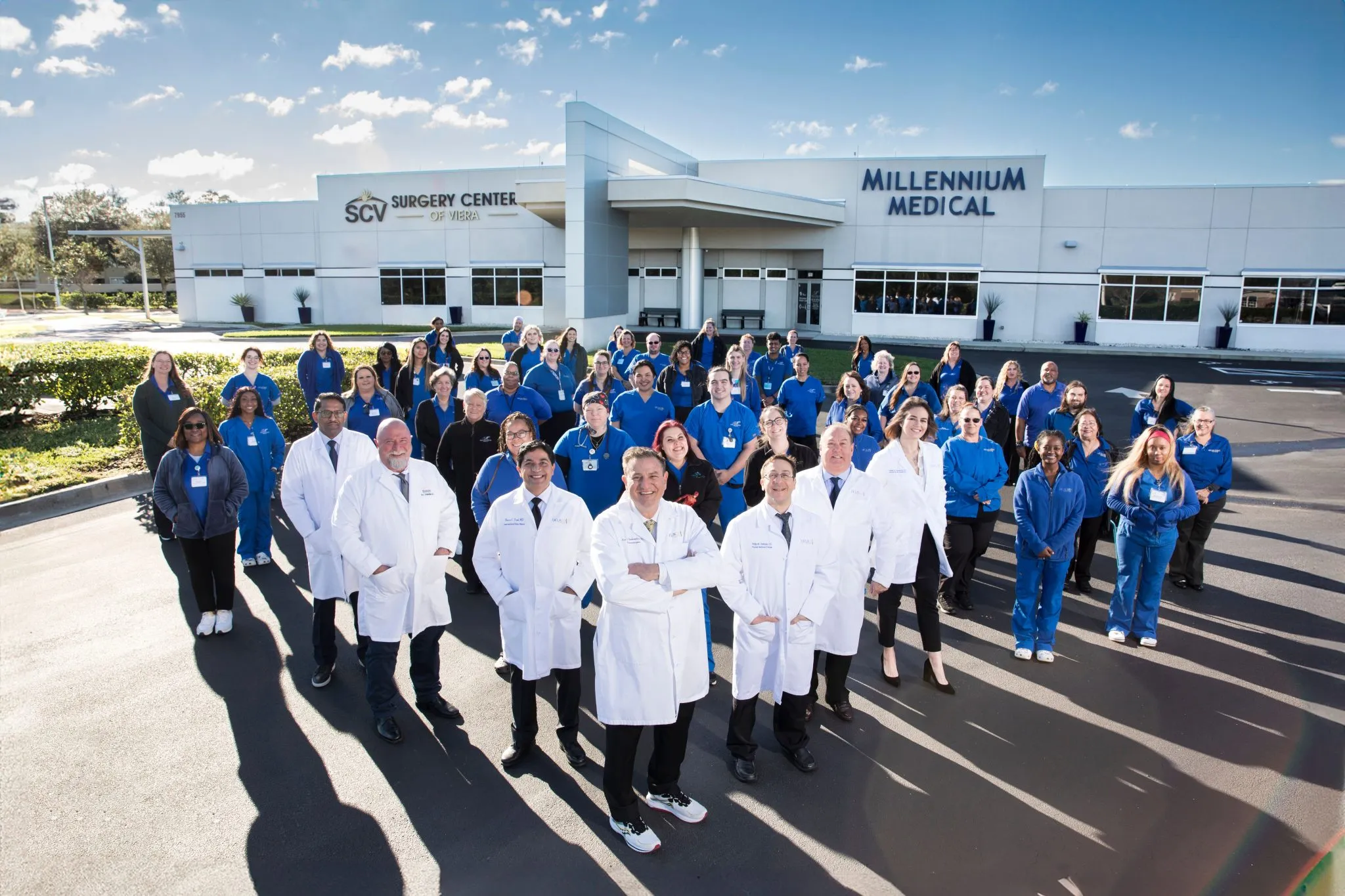
The Qualification That Matters Most: Fellowship Training in Spine
Board certification is the baseline. Every surgeon treating your spine should be board-certified by the American Board of Neurological Surgery or American Board of Orthopaedic Surgery. But that certification alone doesn’t make someone a spine specialist.
During standard neurosurgery residency, I spent 70% of five years performing spine procedures. That’s vastly more spine exposure than orthopedic surgeons receive – they typically dedicate maybe 10% of their five-year training to spine work, with most time spent on knees, shoulders, and hips. But even that neurosurgery foundation required additional specialization.
Fellowship training in spine surgery is where real expertise develops. This additional year of concentrated training – after completing a five-year residency – focuses exclusively on complex spine procedures, imaging interpretation, and understanding the biomechanics of spinal motion and stability.
After graduating #1 from USC Keck School of Medicine with Highest Distinction, I was the top pick in the United States for medical students entering neurosurgery residency. That ranking allowed me to choose between the top three neurosurgery programs at the time: University of Florida at Gainesville, Barrow Neurological Institute in Phoenix, and University of Washington in Seattle. I selected the University of Florida – the #1 ranked program in the world when I trained.
Following residency, I completed NIH-funded fellowship training, dedicating another year exclusively to advanced spine surgery techniques. That combined training taught me not just how to operate, but how to identify which patients actually need surgery versus those who’d recover with conservative care. More importantly, it taught me to recognize patterns in MRI findings that most physicians miss entirely.
Why Many Doctors Miss the True Source of Disc Pain
Herniated disc goes by ten different names in medical practice. This creates tremendous confusion among patients trying to understand their diagnosis and research treatment options. These ten terms all describe essentially the same condition – an abnormal disc visible on imaging studies:
- Herniated disc – the proper medical term for the condition
- Bulging disc or disc bulge – describes the outward protrusion
- Protruding disc or disc protrusion – another term for the bulge
- Slipped disc – common lay term, though discs don’t actually slip
- Extruded disc or disc extrusion – when nucleus material breaks through completely
- Degenerative disc disease – the underlying process causing disc changes
- Ruptured disc – emphasizes the tear in the annulus
- Disc prolapse – British term for herniation
- Sequestered disc – when disc material breaks free entirely
- Contained disc herniation – when material protrudes but outer layer stays intact
Whether your doctor says you have a bulging disc, protruding disc, or herniated disc, they’re describing the same basic problem. The diagnostic tool of choice for identifying these conditions is MRI scanning. CAT scans can occasionally show disc herniations but the detail is difficult to interpret. MRI provides clear visualization of soft tissue structures including disc material, annular tears, and nerve compression.

Understanding this terminology confusion helps when researching treatment options and consulting different surgeons. They may use different terms, but if they’re all referring to abnormal disc appearance on your MRI, they’re discussing the same pathology – just with different labels.
The Confusion of Multiple Names for the Same Condition
Surgical skill develops through repetition. A surgeon who performs ten herniated disc procedures per year has different capabilities than one who performs ten per month. But case volume alone doesn’t tell the complete story – the type of procedures matters.
Traditional discectomy removes herniated disc material through a larger incision, often requiring bone removal and significant muscle dissection. Fusion procedures eliminate motion between vertebrae using hardware and bone grafts. These approaches treat the herniation but ignore the source – that annular tear.
Endoscopic spine surgery uses miniature cameras and instruments through quarter-inch incisions. This approach allows direct visualization of the disc injury, treatment of the annular tear, and removal of inflammatory material without bone drilling or muscle trauma. It requires completely different skills than open surgery.
My practice has performed over 2,800 endoscopic procedures specifically targeting annular tears in herniated discs. This focused volume in one specific technique creates expertise that general spine surgeons – even highly skilled ones – simply cannot match. Every procedure reinforces pattern recognition, refines technique, and deepens understanding of anatomical variations.
Ask any surgeon you’re considering: How many endoscopic disc repairs have you personally performed? How many specifically target annular tears? What’s your revision rate – meaning patients who need repeat surgery? These numbers reveal far more than total case counts or years in practice.
Case Volume in Endoscopic Repairs: The Experience Factor
Degenerative disc disease doesn’t start with the bulge you see on your MRI. It starts with an annular tear – a split in the tough outer layer of the disc that allows the soft inner nucleus to push through. That herniated material gets stuck in the tear, triggering an inflammatory response that causes your chronic pain. The inflammation – not the herniation itself – is what generates the pain signals your brain interprets as back pain.
Here’s the problem that explains why so many patients end up with failed back surgery: 100% of people over age 45 have disc herniations visible on MRI. Read that again – every single person walking around over 45 has herniated discs. Only 10-15% have symptomatic herniations actually causing pain. The rest have what we call “incidental findings” – abnormalities that look impressive on imaging but aren’t generating any symptoms.
Most physicians look at your MRI, see a herniated disc, and assume that’s your pain source. They recommend surgery to remove the herniation. But if they’re not treating the annular tear where the herniation originated – if they’re not addressing the inflammation created by herniated material stuck in that tear – they’re not addressing the actual cause of your pain. They’re operating on an anatomical finding rather than treating a pain generator.
This is why 99% of doctors cannot properly diagnose back pain sources. They’re trained to identify abnormalities on imaging, not to correlate those findings with your specific pain pattern, physical examination findings, and pain history. That correlation requires specialized training in disc pathology and significant case volume treating disc injuries specifically – not just performing general spine surgery.
Imaging-Guided Diagnosis: Reading Between the Lines
Every surgery carries risk. Honest surgeons acknowledge this. But the type and frequency of complications varies dramatically based on surgical approach and surgeon expertise.
Traditional spine surgery complications include:
- Infection: Open incisions create infection risk requiring antibiotics or additional surgery
- Nerve damage: Retraction and manipulation during surgery can injure nerve roots permanently
- Spinal fluid leak: Dural tears require repair and extended recovery
- Muscle trauma: Dissecting through back muscles causes chronic weakness and pain
- Excessive bleeding: Large incisions and bone work increase blood loss risk
- Failed back surgery syndrome: Scarring from the surgical approach causes chronic pain worse than original symptoms
Minimally invasive techniques reduce but don’t eliminate these risks. Endoscopic surgery through quarter-inch incisions avoids muscle cutting, minimizes bleeding, and reduces infection risk substantially. But technique alone doesn’t guarantee safety – surgeon experience matters enormously.
In 20 years performing over 2,800 endoscopic disc procedures, my practice has documented zero major surgical complications. No infections requiring antibiotics. No nerve injuries causing permanent weakness. No spinal fluid leaks. No excessive bleeding requiring transfusion.
This safety record results from three factors: surgical technique that avoids tissue trauma, meticulous attention to sterility and hemostasis, and careful patient selection. Not every patient is a candidate for endoscopic repair. Knowing when not to operate is as important as technical skill.
Ask potential surgeons: What’s your complication rate specifically for the procedure you’re recommending? How many patients required reoperation within one year? How many developed infections? Don’t accept vague reassurances – request specific numbers.
Published Outcomes: Transparency That Builds Trust
An MRI scan shows anatomy. It doesn’t show pain. Connecting the two requires clinical expertise that most physicians lack.
I developed the Deuk Spine Exam specifically to bridge this gap. This diagnostic system combines your pain history, physical examination findings, and MRI analysis to determine with 99% accuracy whether your disc herniation is causing your pain – or if something else is the culprit.
The exam identifies:
- Annular tear location and severity: Not all tears cause pain. The exam determines if your tear matches your pain distribution and intensity
- Nerve compression patterns: Herniated material can compress nerve roots, creating leg pain and numbness. But disc tears can cause severe back pain without any nerve involvement
- Inflammatory markers: High-intensity zones on MRI indicate active inflammation in disc tears. These correlate strongly with pain levels
- Motion segment stability: Flexion-extension x-rays reveal whether instability contributes to your pain, requiring different treatment
- Previous surgical changes: Failed back surgery often creates scarring that mimics disc pain. Accurate diagnosis prevents unnecessary repeat procedures
This diagnostic precision separates surgeons who treat imaging findings from those who treat actual pain sources. You need a surgeon who looks at your MRI and says “this specific finding explains your exact symptoms” – not one who points to a herniation and recommends removing it.
The Complication Rate That Should Matter Most
I graduated #1 from USC Keck School of Medicine with Highest Distinction, then trained at the University of Florida’s neurosurgery program – the #1 ranked program in the world when I completed my residency. That training provided exposure to complex cases, mentorship from leaders in spine surgery, and rigorous technical skill development that shaped my surgical foundation.
But pedigree alone doesn’t make a great surgeon. I’ve seen graduates from prestigious programs produce mediocre outcomes. I’ve seen surgeons from lesser-known programs achieve excellent results through dedication and continuous learning.
What matters is whether the surgeon has translated their training into specialized expertise. Did they pursue additional fellowship training? Do they focus exclusively on spine, or split time between spine and other subspecialties? Have they published research advancing the field?
Training pedigree indicates potential. Track record demonstrates realized expertise. Look for both.
Recovery Time: The Real-World Impact
Any surgeon can claim excellent results. Few will publish them.
Peer-reviewed publication in medical journals requires rigorous data collection, independent review, and transparent reporting of both successes and complications. It’s the difference between marketing claims and scientific evidence.
Our research on treating annular tears with endoscopic laser surgery appears in PubMed and PMC databases. These publications detail our technique, report complication rates, and demonstrate long-term pain relief in patients who failed conservative treatment. This level of transparency is rare in spine surgery.
When evaluating surgeons, ask: Have you published your outcomes in peer-reviewed journals? Can I read your published research? What were your complication rates in those studies?
Surgeons who publish outcomes demonstrate confidence in their results and commitment to advancing the field. Those who rely solely on patient testimonials and marketing materials may have something to hide.
Motion Preservation vs. Fusion: A Critical Distinction
Surgical success isn’t just about pain relief. It’s about returning to normal life.
Traditional lumbar fusion requires 6-12 months recovery. Patients spend days in the hospital, weeks in pain medication, and months in physical therapy. Many never return to physically demanding work or recreational activities they enjoyed before surgery.
Standard microdiscectomy shortens recovery to 6-8 weeks. Patients typically go home the same day or next morning. But the approach still requires cutting through muscles, removing bone, and creating scar tissue that limits future treatment options.
Endoscopic disc repair through our technique allows patients to walk within one hour after surgery. They go home the same day. Most return to desk work within days and physical labor within 2-4 weeks. This isn’t marketing exaggeration – it’s documented in our published outcomes.
The difference comes from preserving anatomy rather than disrupting it. No bone removal means spinal stability remains intact. No muscle cutting means strength returns immediately. Quarter-inch incisions heal in days rather than months.
Recovery time directly correlates with tissue trauma. Ask surgeons: What’s the typical recovery timeline for your approach? When can patients return to work? When can they resume exercise and recreational activities? The answers reveal how invasive the procedure actually is.
The Surgeon's Training Pedigree: Why It Matters
Spinal fusion permanently eliminates motion between vertebrae. Hardware and bone grafts lock the segment rigid. This approach makes sense for severe instability, fractures, or deformity. For simple disc herniations, it’s often overkill.
Fusion creates new problems. Adjacent segments must compensate for lost motion, accelerating their wear. Many fusion patients develop new herniations above or below the fused levels within 5-10 years, requiring additional surgery. The approach trades one problem for another.
Motion-preserving surgery treats the disc injury without sacrificing spinal mobility. Endoscopic techniques can remove herniated material, seal annular tears, and eliminate inflammation while maintaining the disc’s cushioning function and normal range of motion.
I’ve seen hundreds of patients referred after other surgeons recommended fusion. Many turned out to be excellent candidates for motion-preserving repair. They avoided fusion’s risks and limitations while achieving complete pain relief.
The key is accurate diagnosis. If your pain truly comes from instability, fusion may be necessary. But if the source is an inflammatory annular tear with herniation – which accounts for 85% of chronic disc pain – motion-preserving repair offers superior outcomes without fusion’s downsides.
When a surgeon recommends fusion, ask: Is there documented instability on flexion-extension x-rays? Have you considered motion-preserving alternatives? What happens to the adjacent disc levels after fusion?
Board Certification and Professional Standing
Board certification by the American Board of Neurological Surgery (ABNS) or American Board of Orthopaedic Surgery (ABOS) represents the minimum qualification for spine surgery. These certifications require completing accredited residency training, passing rigorous written and oral examinations, and demonstrating clinical competence.
But certification alone doesn’t distinguish expertise levels. Every board-certified neurosurgeon passed the same exams. What separates exceptional surgeons from adequate ones is what they did after certification.
Professional standing indicators that matter:
- Fellowship designation (FAANS): Fellow of the American Association of Neurological Surgeons indicates peer recognition of contributions to the field
- Academic appointments: University teaching positions require demonstrating expertise through education and research
- Medical society leadership: Roles like past president of county medical societies indicate peer respect and engagement
- Hospital leadership positions: Appointments as surgery department chair or chief of staff reflect administrative competence and peer trust
- Industry recognition: Designations like Johnson & Johnson Spine Center of Excellence acknowledge surgical quality and outcomes
I hold all these credentials – not to impress, but because they represent validation from multiple sources: peers, academic institutions, professional organizations, and industry leaders. These aren’t self-proclaimed titles. They’re earned through demonstrated expertise and contribution.
When researching surgeons, verify their credentials through official sources. Board certification appears on ABNS or ABOS websites. Fellowship status is listed on AANS membership directories. Academic appointments appear on medical school faculty pages. Don’t rely solely on practice websites – confirm independently.
The Diagnostic Accuracy That Changes Everything
Surgical skill means nothing if you’re operating on the wrong diagnosis.
Most physicians achieve perhaps 60-70% diagnostic accuracy for spine pain sources. They identify obvious problems – large herniations compressing nerves show up clearly on MRI and correlate with leg pain and weakness. But subtle disc injuries causing purely back pain? Those get missed constantly.
The Deuk Spine Exam achieves 99% diagnostic accuracy by combining three elements most physicians evaluate separately:
Pain history pattern analysis: When did pain start? What makes it worse or better? Does it radiate? These details reveal whether disc injury, facet arthritis, sacroiliac dysfunction, or muscle spasm is the primary generator.
Targeted physical examination: Specific maneuvers stress different spinal structures. A positive straight leg raise indicates nerve root irritation. Pain with extension that’s relieved by flexion suggests facet arthritis. Midline tenderness over a specific disc correlates with annular tear inflammation.
Advanced imaging correlation: High-intensity zones on T2-weighted MRI indicate inflammatory annular tears. Dark disc appearance on T2 suggests dehydration and degeneration. Nerve root displacement indicates compression. But these findings only matter if they match the pain pattern and physical exam.
This integrated approach identifies the true pain generator with near-certainty. That precision allows targeted treatment of the actual problem rather than surgery based on imaging findings that might be coincidental.
Diagnostic accuracy determines surgical success rates. Operating on the correct diagnosis cures pain. Operating on the wrong diagnosis creates failed back surgery syndrome – often worse than the original problem.
Targeted Treatment vs. Standard Approaches
Come prepared with specific questions that reveal actual expertise rather than marketing claims:
- How many endoscopic disc procedures have you personally performed? Look for consistent volume over multiple years, not total career numbers that might include early training cases
- What’s your complication rate for this specific procedure? Require actual percentages, not reassurances that complications are “rare”
- Have you published outcomes in peer-reviewed journals? Ask for links to publications in PubMed or other medical databases
- How do you diagnose which disc is causing my pain? Listen for comprehensive assessment combining history, exam, and imaging – not just “your MRI shows a herniation”
- Will this procedure preserve spinal motion? Understand whether you’re getting motion-preserving repair or fusion
- What’s the typical recovery timeline? Get specific dates for returning to work, exercise, and normal activities
- What happens if the pain doesn’t improve? Understand their revision approach and success rates with reoperations
- Do you drill bone during this procedure? Bone removal weakens spinal stability and limits future treatment options
Vague answers or defensiveness about these questions signals problems. Confident surgeons with strong track records answer directly with specific data.
Questions to Ask Every Surgeon You Consult
Standard herniated disc surgery removes the herniation. Simple concept. But if the annular tear remains untreated, the disc can herniate again. If the inflammatory process continues, pain persists despite “successful” herniation removal.
Here’s what most surgeons miss: The source of chronic back pain in 85% of cases isn’t just the herniated disc material – it’s the herniated material stuck in the tear in the back of the disc, causing inflammation. That inflammation generates the pain signals that make your life miserable.
Traditional surgery removes the visible herniation but leaves the torn annulus untreated. The tear remains open. Inflammatory proteins continue leaking. Pain often persists or returns because the actual source wasn’t addressed.
The Deuk Laser Disc Repair is the only surgery in the world that specifically targets this source. We don’t just remove herniated material – we treat the annular tear where the herniation is stuck, with laser energy, and eliminate the inflammatory tissue causing your pain. This addresses the complete pathology:
- Identify the annular tear location: Using endoscopic visualization to find exactly where the disc is torn
- Remove herniated material from the tear: Extract the disc fragment stuck in the tear that’s triggering inflammation
- Eliminate inflammatory tissue: Remove granulation tissue and inflammatory byproducts causing pain signals
- Preserve disc height and motion: Maintain spinal biomechanics to prevent adjacent segment problems
This comprehensive approach requires understanding disc pathophysiology, not just surgical technique. Most surgeons learned to remove herniations in training. Few learned to treat annular tears specifically. None have published research proving this approach cures chronic back pain – except our facility.
That’s why the Deuk Laser Disc Repair represents a fundamentally different approach. We’re not treating what we see on the MRI (the herniation). We’re treating what’s causing your pain (the herniation stuck in the annular tear, creating inflammation). The distinction determines whether you get temporary improvement or permanent cure.
Why Neurosurgeons Have an Edge
Both neurosurgeons and orthopedic surgeons can legally operate on the spine. But training differences create expertise gaps.
Neurosurgery residency dedicates 70% of five years to spine and nervous system surgery. That’s roughly 3.5 years focused on spinal anatomy, neurophysiology, and surgical technique. We learn to identify subtle neurological deficits, understand pain pathways, and recognize when nerve structures are at risk.
Orthopedic surgery residency spreads five years across multiple subspecialties – joints, trauma, pediatrics, sports medicine, and spine. Maybe 10% of training focuses on spine, totaling perhaps six months. The remaining 4.5 years develops expertise in knees, shoulders, hips, and fracture care.
Some orthopedic surgeons pursue spine fellowship training, adding a focused year after residency. That additional training substantially improves their spine expertise. But even with fellowship, the cumulative spine exposure typically doesn’t match neurosurgery training volume.
These differences matter most for complex cases requiring nuanced decision-making about nerve decompression, anatomical variations, and neurological risk assessment. For straightforward disc herniations in young patients, both specialties can achieve good outcomes. For challenging cases involving prior surgery, unusual anatomy, or diagnostic uncertainty, neurosurgical training provides advantages.
Choose based on the surgeon’s specific expertise and track record, not specialty alone. But understand that neurosurgeons, on average, have substantially more spine-focused training than orthopedic surgeons.
What Makes Deuk Spine Different
After 20 years developing and refining endoscopic techniques for disc injuries, several factors distinguish our approach from standard spine surgery:
We’re the only facility in the world that specifically targets annular tears as the primary pain source. Other centers remove herniations. We treat the tear that caused the herniation. That’s why we published the only research demonstrating a cure of chronic back pain through annular tear treatment.
Zero major complications in over 2,800 procedures proves the technique’s safety. No infections. No nerve injuries. No spinal fluid leaks. This safety record comes from technical precision and avoiding the tissue trauma that causes complications in traditional surgery.
95% success rate in eliminating chronic back pain. Our outcomes aren’t measured by “improvement” – they’re measured by cure. The vast majority of patients achieve complete pain relief and return to normal activities without restrictions.
Same-day recovery lets patients walk within one hour and go home. No hospital stay. No weeks in bed. Patients return to desk work in days and physical labor in weeks. This recovery speed results from quarter-inch incisions and no bone removal.
99% diagnostic accuracy prevents wrong-site surgery. The Deuk Spine Exam combines history, examination, and imaging analysis to identify the exact pain generator before any procedure. This precision explains why our outcomes consistently exceed industry standards.
Published research in peer-reviewed journals validates our outcomes. We don’t just claim success – we prove it through rigorous study publication available on PubMed and PMC databases.
Proprietary patented techniques ensure standardization. The Deuk Laser Disc Repair procedure can’t be modified or degraded by other practitioners. Patients receive the exact technique we developed, tested, and published.
These advantages explain why patients travel from across the country and internationally for treatment. Local surgeons recommended fusion. We offered motion-preserving repair targeting the actual pain source. The difference in outcomes speaks for itself.
Making Your Decision
Choosing a herniated disc surgeon determines whether you’ll achieve cure or just improvement, whether you’ll recover in days or months, whether you’ll preserve spinal motion or accept fusion’s limitations.
Don’t settle for the first opinion. Spine surgery is rarely urgent – taking time to research and consult multiple surgeons improves decision quality substantially. Get your MRI images on disc and share them with any surgeon you’re considering. Many offer free reviews to determine if you’re a candidate.
Look beyond convenience and insurance acceptance. The best surgeon might not be in your town. The best technique might not be covered by your insurance. But choosing based on location or cost rather than expertise and outcomes often leads to failed surgery requiring revision – costing far more in the long run.
Focus on the qualifications that actually predict success: fellowship training in spine procedures, consistent case volume in endoscopic repairs, published outcomes demonstrating safety and efficacy, diagnostic systems that achieve high accuracy, and treatment approaches that target the specific source of your pain rather than just visible herniations.
Your spine deserves the best care available. That means finding a surgeon who understands disc pathophysiology, performs procedures specifically designed to treat annular tears, publishes transparent outcomes, and can demonstrate consistent success without complications.
If you’ve exhausted conservative treatment and surgery seems inevitable, make sure you’re choosing a surgeon who will cure your pain rather than just operate on your herniation. The difference determines whether you’ll return to normal life or become another failed back surgery statistic.
For a free MRI review to determine if you’re a candidate for motion-preserving endoscopic repair, contact Deuk Spine Institute. We’ll evaluate your imaging, review your history, and provide an honest assessment about whether our technique can help – even if that means recommending you stay with your current surgeon. Accurate diagnosis and appropriate treatment selection matter more than adding another procedure to our volume.
Your chronic back pain has a source. Finding a surgeon who can identify and treat that specific source – rather than operating based on general MRI findings – is what transforms outcomes from adequate to exceptional.
Frequently Asked Questions
-
What type of doctor performs herniated disc surgery?
Neurosurgeons and orthopedic spine surgeons both perform herniated disc surgery. Neurosurgeons typically have more spine training (70% of residency vs 10% for orthopedic surgeons) and focus on protecting nerves and the spinal cord. Choose a surgeon with fellowship training, high case volume, and published outcomes.
-
Should I see a neurosurgeon or orthopedic surgeon?
Neurosurgeons generally have more spine-focused training and specialize in nerve protection. However, specialty matters less than the surgeon’s specific experience – look for fellowship training, 50+ procedures annually in your condition, and documented success rates.
-
What is the success rate for herniated disc surgery?
Traditional microdiscectomy achieves 80-90% success for leg pain relief. The Deuk Laser Disc Repair achieves 95% success in eliminating chronic back pain because it treats the annular tear causing inflammation, not just the visible herniation.
-
How long is recovery from herniated disc surgery?
Traditional fusion takes 6-12 months, standard microdiscectomy takes 6-8 weeks, and minimally invasive endoscopic surgery takes 2-4 weeks. With the Deuk Laser Disc Repair, patients walk within one hour and return to desk work within days.
-
When should I have surgery for a herniated disc?
Consider surgery when conservative treatment fails after 6-12 weeks, pain severely impacts daily life, you have progressive weakness, or bowel/bladder dysfunction occurs. Ensure accurate diagnosis first – not all disc herniations on MRI cause symptoms requiring surgery.
-
What questions should I ask a herniated disc surgeon?
Ask about annual procedure volume, complication rates, published outcomes, whether the procedure preserves motion, recovery timeline, and if it treats the annular tear or just removes the herniation. Confident surgeons provide specific data, not vague reassurances.
-
What is the difference between microdiscectomy and endoscopic surgery?
Microdiscectomy uses larger incisions, cuts muscle, often removes bone, and requires 6-8 weeks recovery. Endoscopic surgery uses quarter-inch incisions, preserves anatomy, and recovers in 2-4 weeks. Most importantly, standard procedures don’t treat the annular tear causing chronic pain.
-
What are the risks of herniated disc surgery?
Traditional surgery carries 1-3% infection risk, 1-2% nerve damage risk, and 10-15% failed back surgery syndrome rate. The Deuk Laser Disc Repair has zero major complications in over 2,800 procedures across 20 years.
-
Can a herniated disc heal without surgery?
Acute herniations causing leg pain often improve with physical therapy and injections. Chronic disc injuries with annular tears causing back pain don’t heal naturally – the tear stays open and keeps triggering inflammation, requiring surgical treatment.
-
How do I know if my surgeon is experienced enough?
Look for 50-100+ annual procedures in your specific surgery type, fellowship training, published outcomes in medical journals, and transparent complication rates. Ask directly about experience and demand specific numbers, not vague answers.
-
What makes the Deuk Laser Disc Repair different?
It’s the only surgery targeting herniated material stuck in the annular tear – the actual pain source. Standard procedures remove the herniation but ignore the tear, which is why pain persists. We clean the tear, achieving 95% success with zero complications.
-
Should I get a second opinion before spine surgery?
Yes. Different surgeons recommend different procedures for identical MRI findings. Since 99% of doctors cannot properly diagnose disc pain sources, multiple expert evaluations are essential. Many centers offer free MRI reviews.
-
Does insurance cover herniated disc surgery?
Most insurance plans cover medically necessary surgery after conservative treatment fails. Coverage varies by procedure and carrier. Contact your insurance with specific procedure codes for verification. Advanced procedures may require pre-authorization.
-
How soon can I return to work after surgery?
Desk jobs: 2-4 weeks for traditional surgery, days to 1 week for endoscopic procedures. Physical labor: 6-12 weeks for traditional surgery, 2-4 weeks for minimally invasive approaches. Recovery depends on procedure type and job demands.
-
What if herniated disc surgery doesn’t work?
Failed back surgery syndrome occurs in 10-15% of cases, usually because surgery removed the herniation but didn’t treat the annular tear. Revision surgery is possible but less successful. Accurate diagnosis and choosing the right initial procedure is critical.