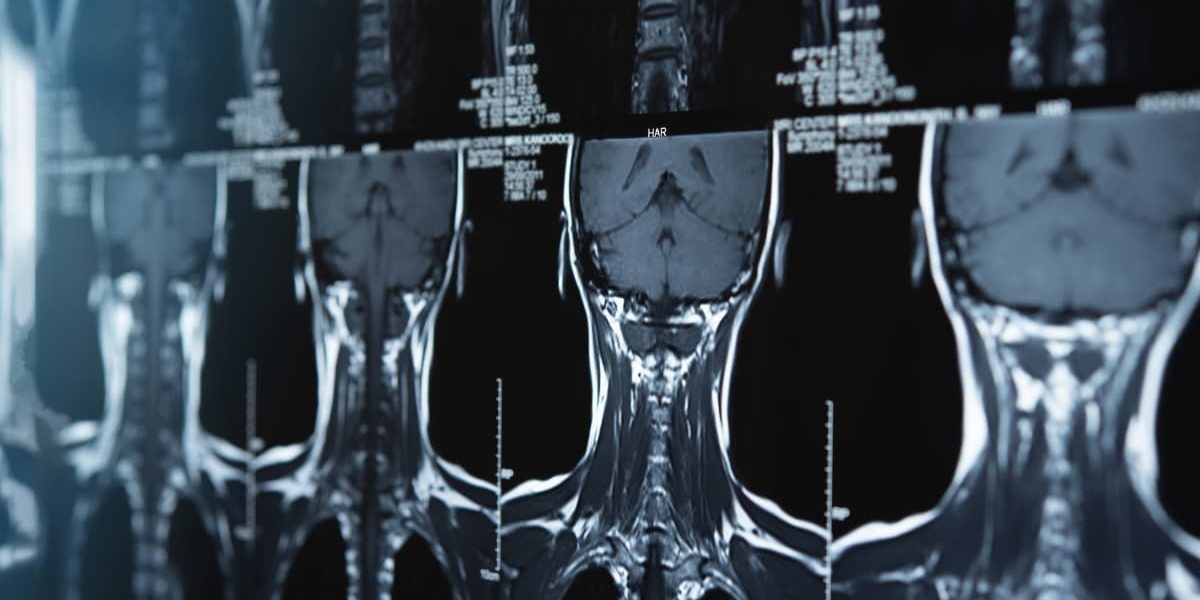
You have been told you need ACDF, anterior cervical discectomy and fusion. Maybe a surgeon reviewed your MRI, pointed to a herniated disc, and explained that removing the disc and fusing the vertebrae above and below it is your best option. Before you accept that recommendation, you deserve to understand what fusion actually does to your cervical spine, what the research shows about its long-term outcomes, and whether cervical spine surgery options exist that treat the same pathology without permanently eliminating motion at that spinal level – an ACDF alternative.
After over 30 years performing spine surgery and completing more than 2,000 cervical procedures, I can tell you that invasive fusion surgeries like ACDF are dangerous, frequently unnecessary, outdated in their approach to discogenic neck pain, and rarely eliminate chronic neck pain permanently. There is a category of cervical spine surgery options the vast majority of patients facing an ACDF recommendation have never been offered. Understanding the difference begins with understanding what is actually causing the pain.
Medical Disclaimer: This content is for educational purposes only and does not constitute medical advice, diagnosis, or treatment. Individual results may vary. Always consult with a qualified healthcare provider regarding your specific condition and treatment options.
What ACDF Actually Does and Why It Rarely Cures Neck Pain
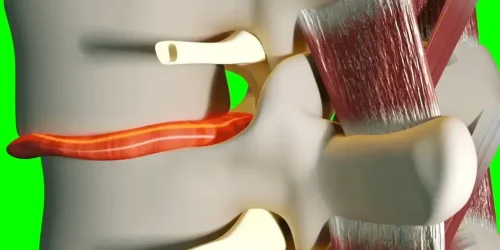
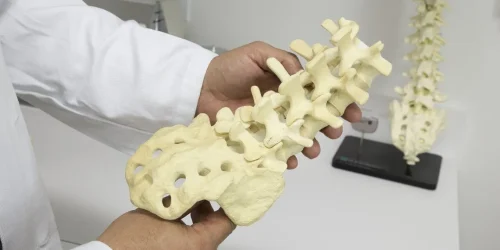
Anterior cervical discectomy and fusion involves making an incision through the front of the neck, removing the herniated disc material, and then fusing the two vertebrae that bordered it using a bone graft and metal hardware. The procedure relieves nerve compression by decompressing the spinal canal or neural foramen. It does not remove the inflammatory tissue from the posterior annular tear that is generating the neck pain itself.

This is the central problem with ACDF as a treatment for chronic neck pain. Neck pain originates from inflammation within the posterior annular tear caused by herniated nucleus pulposus material trapped in that tear. Fusion removes the disc and eliminates motion at that level. It does not debride the annular tear, does not remove the inflammatory tissue responsible for the axial neck pain, and does not treat the pain-generating mechanism directly. Patients frequently experience relief from arm symptoms after ACDF because nerve compression is reduced, but chronic neck pain itself continues at high rates because the pain source was never treated.
The hardware used in ACDF, plates, screws, and interbody cages, introduces its own set of risks that compound over time. Hardware can fail, loosen, or migrate. The fused segment places increased mechanical stress on adjacent spinal levels, accelerating degeneration at C3-C4 above a C4-C5 fusion, or at C5-C6 below it. Adjacent segment disease requiring additional fusion surgery is a well-documented long-term outcome that is often framed as a new problem rather than a foreseeable consequence of the original procedure.
The Serious Complications ACDF Patients Face and Why an ACDF Alternative Matters
ACDF is presented to patients as a routine, well-established surgery. The complication profile deserves more direct discussion than it typically receives during a surgical consultation.
- Spinal fluid leak (dural tear). Rupture of the membrane surrounding the spinal cord can occur during dissection, requiring immediate repair and sometimes extended hospitalization.
- Wound infection. The anterior cervical approach and the presence of permanent hardware create infection risk that can be difficult to resolve without hardware removal.
- Hardware failure or migration. Plates, screws, and cages can loosen, fracture, or shift over time, sometimes requiring revision surgery.
- Failed Cervical Spine Surgery Syndrome. Ongoing or worsening neck and arm pain following surgery affects a significant percentage of ACDF patients, particularly when the primary pain source was discogenic neck pain rather than nerve compression.
- Dysphagia and voice changes. The anterior approach requires retraction of the esophagus and laryngeal nerve structures, and lasting swallowing difficulty or hoarseness occurs in a meaningful percentage of cases.
- Adjacent segment degeneration. The fused level transfers biomechanical stress to neighboring segments, accelerating wear and creating conditions for future surgery.
Every ACDF also requires opioid narcotics for post-operative pain management. For a patient population already dealing with chronic neck pain, the introduction of opioids following fusion surgery carries high potential for dependency, abuse, and addiction. This is a consequence of the procedure that is rarely foregrounded in pre-surgical discussions.
Spinal fusion charges range from $50,000 to $500,000 depending on the number of levels fused, whether revision is required, and the facility where the surgery is performed. That range does not account for the cost of complications, additional surgeries for adjacent segment disease, or the economic impact of a 6 to 12 month recovery. See our spinal fusion comparison page for a full breakdown of what fusion involves.
How Cervical Pain Actually Works and What Treatment Must Do
Understanding why an ACDF alternative is viable for most patients requires understanding the anatomy of cervical disc pain. Each cervical disc consists of the annulus fibrosus, a tough outer ring, and the nucleus pulposus, a gel-like interior. When the disc is injured, the nucleus pulposus herniates into a tear in the posterior annulus fibrosus, triggering chronic inflammation at that site. That inflammation does not resolve on its own. Disc injuries do not heal without treatment, and no conservative measure, physical therapy, injections, or medication, can repair structural disc damage.
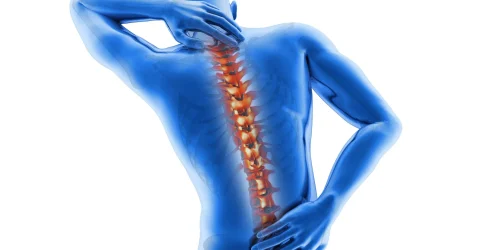
Neck pain and arm pain are two separate conditions that may both stem from the same disc injury but require separate evaluation. Axial neck pain comes from inflammation at the posterior annular tear. Radicular arm symptoms, which include pain down the arm, numbness, pins and needles, and arm weakness, are driven primarily by chemical nerve inflammation, not mechanical compression. Identifying which condition is present and confirming which disc level is responsible determines what treatment is appropriate.
An effective cervical disc repair procedure must accomplish six things:
- Remove inflammatory tissue from the posterior annular tear to eliminate the structural source of axial neck pain.
- Remove herniated nucleus pulposus material trapped in the tear that is sustaining the chronic inflammatory response.
- Allow the annulus to heal naturally over 9 to 12 months without synthetic or cadaver materials placed in the spine.
- Preserve cervical spine motion and stability rather than sacrificing a functional spinal segment.
- Avoid fusion or permanent motion loss at the treated level.
- Be minimally invasive, using a 4mm cervical incision, performed outpatient, with rapid return to activity.
ACDF satisfies none of these requirements. It removes the disc entirely, implants permanent hardware, and eliminates motion at the treated level. Deuk Laser Disc Repair® satisfies all six. Learn more about the cervical disc conditions we treat and how the two approaches compare.
When ACDF Is Actually Necessary: Cervical Spine Surgery Options by Pathology
There are clinical situations where fusion is genuinely indicated. Cervical instability, where the spinal column has lost structural integrity through trauma, severe degeneration, or prior surgery, may require stabilization that only fusion provides. Spinal cord compression causing myelopathy, with symptoms including balance problems, loss of hand dexterity, and urinary incontinence, requires decompression that may necessitate an anterior approach.
What makes these indications relevant is their specificity. True cervical instability is identifiable on imaging through dynamic flexion-extension X-rays that show abnormal movement between vertebrae. Myelopathy is confirmed by clinical examination and MRI findings of cord signal change. These are not the same as a herniated disc causing neck pain and arm symptoms on an otherwise stable spine. The imaging finding that drives most ACDF recommendations, a herniated disc with nerve root contact, is not by itself an indication for fusion.
An MRI alone is not sufficient to make this determination. MRI is a picture of anatomy, not a diagnosis of pain. Radiologists miss disc bulges from annular tears more than 50% of the time on standard MRI reads, and standard imaging rarely identifies the posterior annular inflammation that is the primary pain generator. Diagnosis requires correlating imaging findings with neurological examination and symptom patterns through a structured diagnostic process like the Deuk Spine Exam®. Learn more about the diagnostic process we use.
Deuk Laser Disc Repair®: The ACDF Alternative for Discogenic Cervical Pain
Deuk Laser Disc Repair® is a proprietary endoscopic procedure developed to treat disc-related neck pain and arm symptoms without fusion. The procedure accesses the affected cervical disc through a 4mm incision, smaller than a bandage. Through that access, the herniated nucleus pulposus material is removed, the posterior annular tear is debrided, and the inflammatory tissue generating the pain is eliminated directly. No bone is drilled. No hardware is implanted. No cadaver bone, metal, or plastic is placed in the cervical spine.
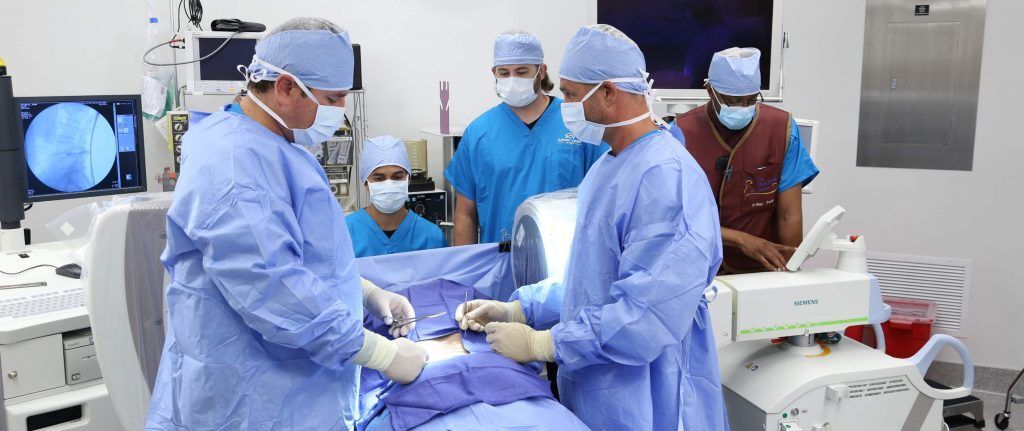
The cervical annulus then heals naturally over 9 to 12 months, with the body completing the repair once the inflammatory blockade is cleared. Patients are discharged the same day. Most are walking within hours of the procedure. Opioid narcotics are not required post-operatively.
Approximately two-thirds of patients with cervical disc disease also experience cervicogenic headaches, headaches originating from the cervical disc pathology itself. These headaches resolve following Deuk Laser Disc Repair® when the disc is the confirmed source. That resolution is a common secondary outcome that patients facing ACDF are never informed about, because fusion does not treat the discogenic pain mechanism that generates those headaches.
In clinical experience with over 2,000 cervical procedures at Deuk Spine Institute, patients report an average of 99% pain relief for treated pain sources, a figure published in peer-reviewed abstracts, with zero surgical complications to date, a 0.01% overall complication rate, and a 0% infection rate. These outcomes apply when the diagnosed pain source matches the treated pathology, which is why accurate diagnosis through the Deuk Spine Exam® precedes every procedure. See the full procedure details on our Deuk Laser Disc Repair® page.
Choosing Between Cervical Spine Surgery Options: What the Decision Should Rest On
The choice between ACDF and an endoscopic ACDF alternative should rest on three factors: the specific pathology identified on imaging, the presence or absence of true cervical instability, and whether the primary complaint is nerve compression symptoms or discogenic neck pain.
If imaging shows cervical instability or cord compression with myelopathy, and physical examination confirms those findings, ACDF or a similar stabilization procedure may be the appropriate choice. If imaging shows a herniated disc at a stable cervical level and the primary symptoms are neck pain with or without arm radiculopathy, the pathology is discogenic and the disc is the pain generator. That pathology is precisely what Deuk Laser Disc Repair® treats, without the hardware, without the fusion, without the 6 to 12 month recovery, and without the opioids.
If you have been recommended for ACDF and have not yet had your MRI reviewed through a diagnostic process that specifically evaluates discogenic pain sources, you may not have received the full picture of your cervical spine surgery options. Submit your MRI for a free review and find out whether an endoscopic ACDF alternative is appropriate for your specific pathology. Visit our free MRI review page to get started.
Medical Disclaimer: This content is for educational purposes only and does not constitute medical advice, diagnosis, or treatment. Individual results may vary. Always consult with a qualified healthcare provider regarding your specific condition and treatment options.