By Dr. Ara Deukmedjian, MD | Board-Certified Spine Surgeon
Medically Reviewed: January 8, 2026
Last Updated: January 8, 2026
Reading Time: 20 minutes
Medical disclaimer: This content is for educational purposes only and does not constitute medical advice. Individual results may vary. Always consult with your healthcare provider about your specific condition and treatment options.
The C5-C6-C7 cervical spine segments are among the most commonly affected areas requiring neck surgery, accounting for a significant portion of all cervical procedures. These vertebrae sit at the lower portion of your neck and experience substantial mechanical stress from supporting your head while allowing an extensive range of motion. Surgery at these levels typically addresses conditions like herniated discs, spinal stenosis, or degenerative disc disease that have not responded to conservative treatment.
Recent research from 2024 shows that while traditional anterior cervical discectomy and fusion (ACDF) has been the standard approach for decades, it carries a concerning 11% risk of adjacent segment disease requiring reoperation.1 Modern minimally invasive techniques, particularly endoscopic approaches, offer superior outcomes with faster recovery, no fusion hardware, and preservation of natural spine motion.
This comprehensive guide examines everything you need to know about C5-C6-C7 neck surgery, including when it’s necessary, your surgical options, realistic recovery timelines, and how to optimize your outcome.
Understanding the C5-C6-C7 Spine Segments
Anatomy and Function
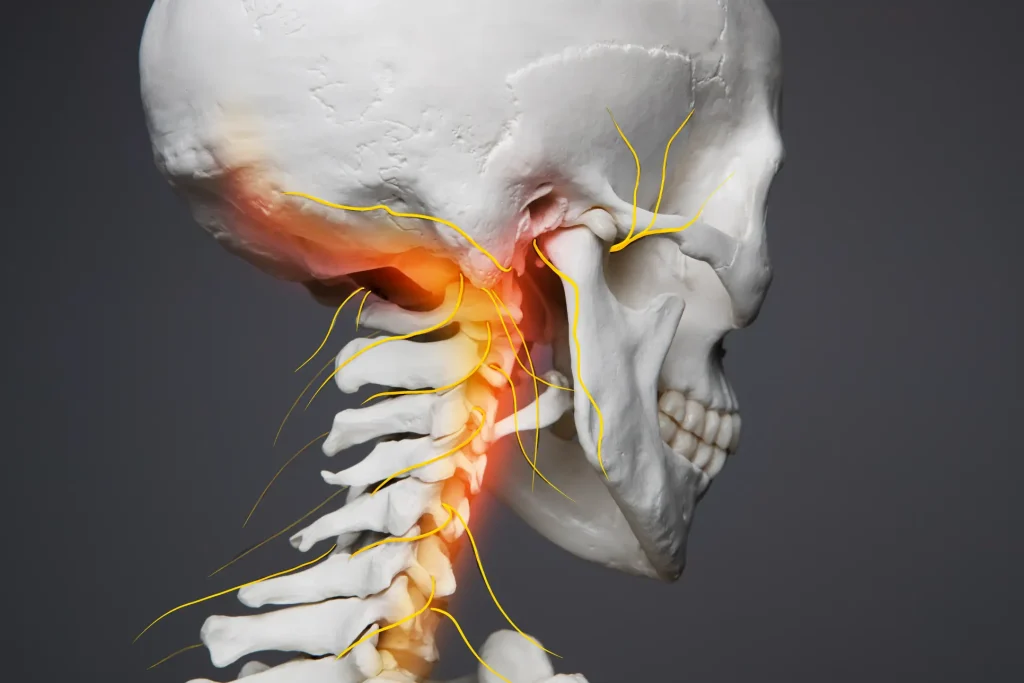
The cervical spine consists of seven vertebrae labeled C1 through C7, extending from the base of your skull to your upper back. The C5, C6, and C7 vertebrae occupy the lower cervical spine and form some of the most mobile segments of your entire spinal column.
C5 vertebra: The fifth cervical vertebra helps support the neck and allows for head movement. The C5 nerve root controls shoulder and upper arm function, particularly the deltoid muscle.
C6 vertebra: This vertebra is involved in both flexion and extension movements. The C6 nerve root provides sensation and motor function to the biceps, wrist extensors, and thumb.
C7 vertebra: The largest cervical vertebra, C7, has a prominent spinous process you can feel at the base of your neck. The C7 nerve root controls triceps function, wrist flexion, and finger extension.
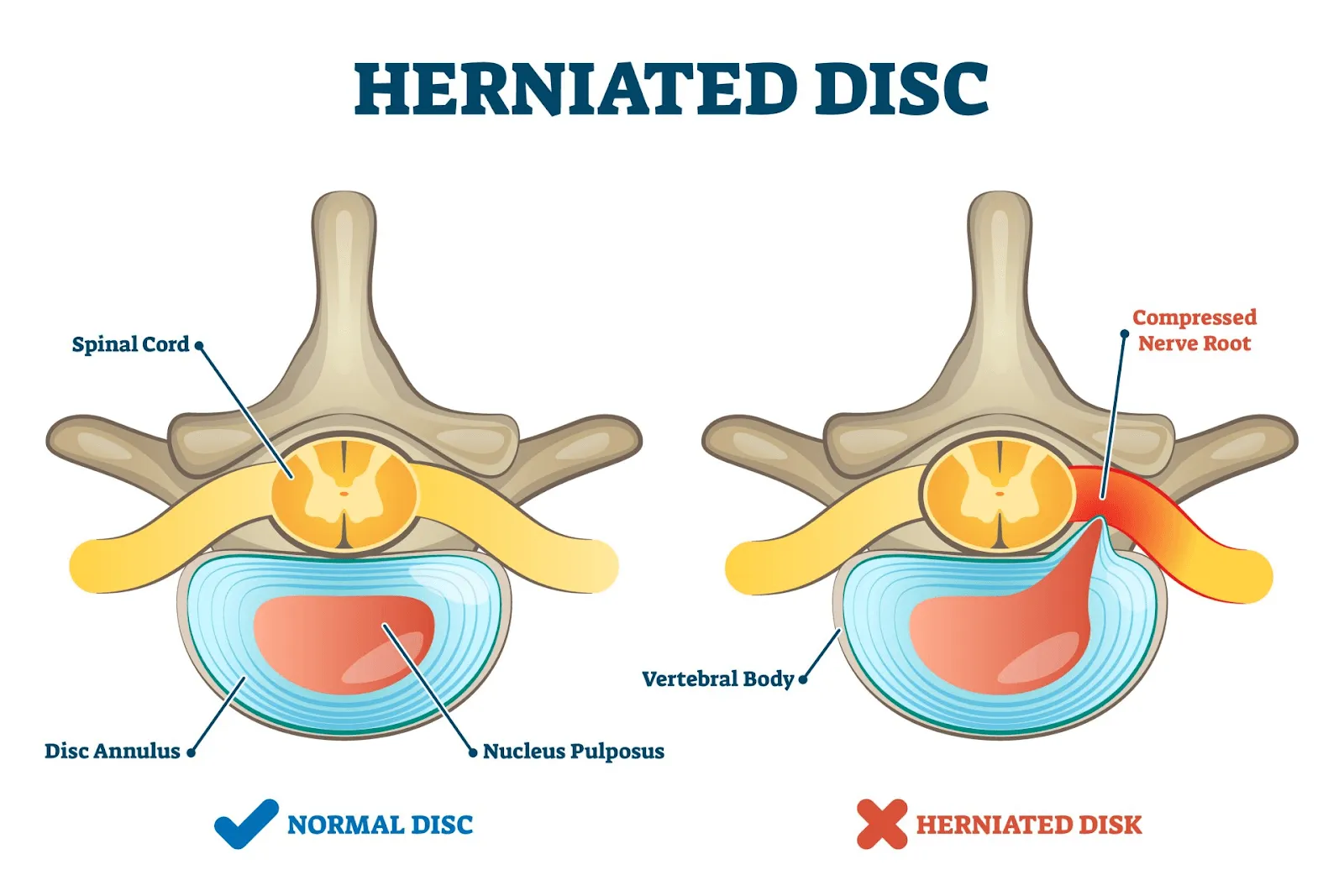
Between each vertebra sits an intervertebral disc that functions as a shock absorber and allows for smooth movement. These discs consist of a tough outer ring (annulus fibrosus) and a gel-like center (nucleus pulposus).
Why These Levels Are Vulnerable
The C5-C6 and C6-C7 disc spaces are among the most commonly herniated levels in the cervical spine. Research indicates that C6-C7 accounts for approximately 45-60% of all cervical disc herniations, followed by C5-C6.2 This high incidence results from several factors:
Mechanical stress: These lower cervical segments bear significant weight from the head while accommodating an extensive range of motion, which can create repetitive stress on the discs.
Anatomical vulnerability: The annulus fibrosus is naturally weaker in the posterolateral region, where herniations are common, and lacks reinforcement from the posterior longitudinal ligament.
Degenerative changes: As we age, discs lose water content and elasticity, making them more susceptible to tears and herniations, particularly at levels that experience the most motion and stress.
How Nerve Compression Occurs
When a disc herniates at the C5-C6 level, it typically compresses the C6 nerve root. A herniation at C6-C7 usually affects the C7 nerve root. This compression causes a specific pattern of symptoms:
C6 radiculopathy (from C5-C6 herniation):
- Pain radiating into the shoulder, outer arm, and thumb
- Weakness in the biceps and wrist extensors
- Numbness in the thumb and index finger
- Reduced biceps reflex
C7 radiculopathy (from C6-C7 herniation):
- Pain radiating down the back of the arm into the middle finger
- Weakness in the triceps and finger extensors
- Numbness in the middle finger
- Reduced triceps reflex
Recent research from 2024 comparing surgical outcomes by nerve root level found that while most patients improve significantly after single-level cervical surgery, arm pain improved by an average of 3.4 points on the pain scale across all nerve root levels.3
When Is Neck Surgery Necessary?
Surgery for the cervical spine is not the first-line treatment. Conservative approaches, including physical therapy, medications, activity modification, and injections, should be explored first. However, surgery becomes necessary when:
Absolute Indications (Urgent Surgery Needed)
Progressive neurological deficits: If you’re experiencing increasing weakness, numbness, or loss of function despite conservative treatment, surgery may be necessary to prevent permanent nerve damage.
Cervical myelopathy: Compression of the spinal cord itself (rather than just nerve roots) is a serious condition that can cause problems with balance, coordination, fine motor skills in the hands, and even bowel or bladder function. This requires prompt surgical intervention to prevent permanent spinal cord injury.4
Cauda equina syndrome: Though rare in the cervical spine, any signs of spinal cord compression with bowel/bladder dysfunction constitute a surgical emergency.
Relative Indications (Surgery After Failed Conservative Care)
Cervical radiculopathy not responding to treatment: If arm pain, numbness, and weakness persist for 8-12 weeks despite appropriate conservative treatment, surgery should be considered. Studies show that patients can improve with conservative management, but those who don’t improve within this timeframe are unlikely to improve without surgery.5
Chronic, disabling pain: Persistent neck pain that significantly impacts your quality of life, prevents you from working, or limits daily activities despite 3-6 months of comprehensive conservative care.
Failed previous surgery: Some patients require revision surgery after initial procedures fail to provide adequate relief or complications develop. A 2025 study on C5 palsy (a complication of cervical surgery) found that laminectomies had the highest incidence at 8%, though most cases resolve.6
Structural instability: Conditions such as spondylolisthesis, in which one vertebra slips forward on another, may require surgical stabilization to prevent further neurological damage.
Common Conditions Affecting C5-C6-C7
Herniated Disc
A herniated disc occurs when the annulus fibrosus develops a tear, allowing the nucleus pulposus to protrude or leak out. This is the most common reason for C5-C6-C7 surgery. The herniated material can compress nerve roots or the spinal cord, causing pain, numbness, weakness, and in severe cases, myelopathy.
Recent research from 2024 has refined our understanding of herniation classifications:
- Disc bulge: The entire disc circumference extends beyond vertebral margins, but the annulus remains intact
- Disc protrusion: The nucleus pulposus pushes against the weakened annulus but remains contained
- Disc extrusion: The nucleus breaks through the annulus but remains connected to the disc
- Disc sequestration: A fragment completely separates and becomes free-floating in the spinal canal
For more detailed information on specific disc levels, see our guides on C4-C5, C5-C6, and C6-C7 disc herniations.7-9
Degenerative Disc Disease
As discs age, they lose water content and become less flexible. This degeneration can cause the disc to collapse, reducing the space between vertebrae and potentially leading to nerve compression. Degenerative changes also increase stress on facet joints, accelerating arthritis in these structures.
Cervical Spinal Stenosis
Spinal stenosis involves narrowing of the spinal canal, which can compress the spinal cord and nerve roots. This narrowing typically results from age-related changes, including bone spurs, thickened ligaments, bulging discs, and facet joint hypertrophy.
Spondylolisthesis
This condition occurs when one vertebra slips forward relative to the vertebra below it. In the cervical spine, this instability places excessive stress on discs and facet joints, often leading to nerve compression and pain.
Bone Spurs (Osteophytes)
Bone spurs commonly develop as the body attempts to stabilize degenerating segments. While intended to provide stability, these bony projections can narrow the spinal canal and neural foramina, compressing nerves and the spinal cord.
Traditional Surgical Approaches
Anterior Cervical Discectomy and Fusion (ACDF)
ACDF has been the standard surgical treatment for cervical disc problems for decades. The procedure involves:
- Making an incision in the front of the neck
- Moving aside muscles, blood vessels, and the esophagus
- Removing the entire damaged disc
- Removing any bone spurs compressing nerves
- Inserting a bone graft or interbody spacer
- Often adding a titanium plate and screws for immediate stability
Success rates: In 85–95% of cases, ACDF effectively reduces arm pain. However, numbness and weakness may persist for weeks to months.10
Hospital stay: Typically one overnight stay, though some patients are discharged the same day.
Recovery timeline: Patients notice significant improvement in arm pain within 6-8 weeks, but complete fusion takes 3-6 months. Full recovery, including return to all activities, typically requires 3-6 months.
Posterior Cervical Discectomy with Foraminotomy
This approach accesses the spine from the back of the neck. The surgeon:
- Makes an incision on the back of the neck
- Moves aside paraspinal muscles (this causes more muscle trauma than anterior approaches)
- Removes a portion of the disc, compressing the nerve
- Widens the neural foramen to decompress the nerve root
Advantages: Does not require fusion, preserving more natural motion.
Disadvantages: More muscle disruption leads to increased postoperative pain and potentially longer recovery.
Hospital stay: Typically 1-2 days.
Recovery timeline: 4-6 weeks to return to light activities, 2-3 months for full recovery.
Cervical Artificial Disc Replacement (ADR)
This motion-preserving alternative to fusion involves:
- Approaching through the front of the neck (like ACDF)
- Removing the damaged disc completely
- Inserting an artificial disc prosthesis designed to maintain motion
Theoretical advantages: Preserves motion at the operated level, potentially reducing stress on adjacent segments and lowering the risk of adjacent segment disease.
Reality check: While ADR sounds appealing, long-term studies show mixed results. Some research indicates that the incidence of adjacent segment disease is similar between ACDF and ADR patients, though this remains controversial.11
Complications: Artificial discs can fail, migrate from their intended position, or cause abnormal motion patterns. Revision surgery for failed ADR can be technically challenging.
Recovery timeline: Typically 2 weeks to return to light activities, 6 weeks for full healing.
Surgical Phobia
Being nervous before and after the treatment is one thing that is detrimental to your recovery.
This is because chemicals that affect your immune system and physical defenses are released into your body when you’re stressed.
Therefore, it is crucial to maintain your composure even if it is acceptable to feel some nervousness and trepidation. Fortunately, there are some helpful suggestions to assist you to control your anxiety so that you can have a tranquil body and mind before you undergo surgery. These consist of:
- Recognizing the source of your anxiety and focusing more intently on it.
- Planning your procedure properly.
- Learning about what to anticipate.
- Disclosing your worries to your surgical team and network of supporters.
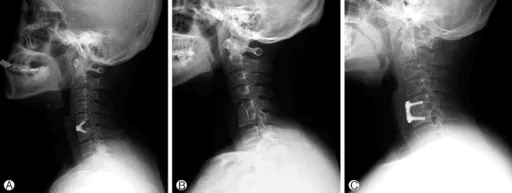
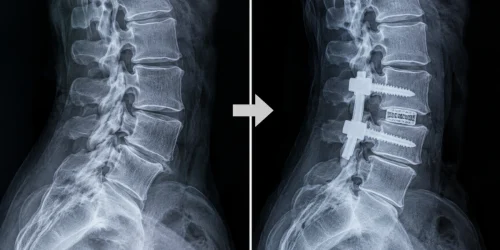
Image: An x-ray highlighting ACDF hardware on the cervical spine.
The Problem with Fusion Surgery
While ACDF has been performed successfully for decades, mounting evidence reveals significant long-term complications that patients should understand before consenting to fusion.
Adjacent Segment Disease: The Hidden Cost
Adjacent segment disease (ASD) is the most concerning long-term complication of cervical fusion. When vertebrae are fused together, the segment loses all motion. This doesn’t eliminate the mechanical demands on your spine—it simply transfers increased stress to the levels above and below the fusion.
The numbers are concerning:
- A 2024 meta-analysis found that 11% of patients develop clinical adjacent segment disease requiring reoperation after ACDF.12
- A 2024 systematic review reported that the incidence of ASD following ACDF ranges from 2.9% to 92%, depending on how it’s measured, with approximately 40% of these cases requiring revision surgery.13
- A large database study found that the overall incidence of symptomatic ASD requiring reoperation was 6.57%, with individuals in their 30s facing the highest risk at 8.12%.14
- One long-term study found that degenerative changes at levels adjacent to fusion occurred in as many as 92% of patients over time, though not all became symptomatic.15
Risk Factors for Adjacent Segment Disease
Recent research has identified several factors that increase your risk of developing ASD after ACDF16,17:
Patient-related factors:
- Older age
- Pre-existing degeneration at adjacent levels
- Obesity (high BMI)
- Severe osteoporosis
- Smoking
- Developmental cervical spinal stenosis
Surgical factors:
- Postoperative loss of cervical lordosis (the natural forward curve)
- Large changes in cervical alignment from pre to post-surgery
- Multilevel fusion (though paradoxically, some studies show lower ASD rates with multilevel fusion because the most degeneration-prone levels are often included in the fusion)
- Plate positioning within 5mm of adjacent disc spaces
The Biomechanical Reality
A 2024 study in Physical Medicine and Rehabilitation found that following ACDF, cervical spine biomechanics are significantly altered, with increased intradiscal pressure and segmental motion at adjacent segments. These biomechanical changes contribute directly to accelerated degeneration.13
The Revision Surgery Challenge
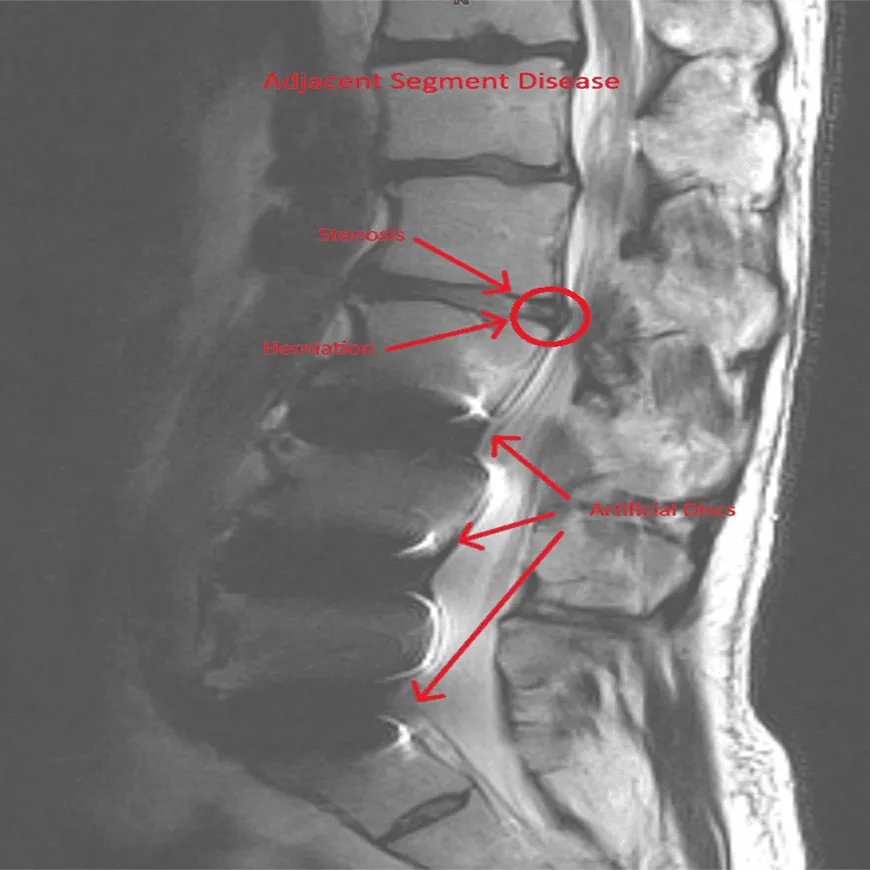
When adjacent segment disease develops and requires surgery, the revision procedure is more complex than the initial surgery18:
- Scar tissue and previous hardware limit surgical access
- Hardware may need to be removed, prolonging operative time
- Blood loss is typically higher in revision surgery
- Outcomes are generally worse than those of primary surgery
- Additional fusion further increases stress on the remaining mobile segments
What This Means for You
If you’re being offered ACDF, you should understand that while it may effectively relieve your current symptoms, you’re accepting:
- Permanent loss of motion at the fused segment
- An 11-21% chance of requiring another surgery within 5-10 years
- Accelerated degeneration of adjacent discs
- Potential for cascading surgeries as adjacent levels fail
These aren’t rare complications—they’re predictable consequences of altering your spine’s natural biomechanics.
Modern Minimally Invasive Alternatives
Advances in surgical technology have enabled procedures that address the pain source without fusion, hardware, or extensive tissue disruption.
Endoscopic Cervical Discectomy
Modern endoscopic techniques allow surgeons to access herniated discs through incisions as small as 4-7mm. Using a specialized endoscope with a high-definition camera, the surgeon:
- Accesses the spine through natural anatomical corridors
- Visualizes the disc and nerve root directly
- Removes only the herniated portion, compressing the nerve
- Preserves the majority of the healthy disc structure
- Leaves no hardware behind
Recent evidence: A 2024 study comparing endoscopic neurotomy to percutaneous radiofrequency ablation found that endoscopic techniques provided more durable long-term pain relief.19
The Deuk Laser Disc Repair® Advantage
At Deuk Spine Institute, we’ve refined endoscopic disc surgery to address the herniated material and sources of inflammation.
The procedure involves:
- A 4mm incision
- Endoscopic visualization of the disc and nerve
- Removal of herniated disc material decompressing the nerve
- FDA-approved laser treatment to vaporize damaged tissue and clean the annular tear
- Preservation of 85-90% of the natural disc
- No hardware, no fusion, no bone removal
Documented outcomes: Over 2,000 Deuk Laser Disc Repair® procedures performed with exceptional outcomes and a 0.01% complication rate in our published series.
Recovery advantage: Same-day discharge and minor restrictions depending on condition.
A Patient’s Experience: Avoiding Fusion After Trauma
Recently, a patient came to Deuk Spine Institute after suffering neck pain from a motorcycle accident. After months of failed physical therapy, she was advised to undergo an invasive ACDF fusion surgery. She shares her story:
“I was told that I had to have this really invasive surgery—they wanted to do a discectomy and fusion. I was very scared, especially after reading what could happen and the risks. It was just too much and actually kind of scary because when I looked into the doctor, he actually had a lawsuit against him, which the people who suggested him to me were not aware of.”
“So, I kept doing my research. I thought, well, maybe I’ll just figure out how to do some exercises to help my herniated disc… now that I know what I know, that’s not going to help your herniated disc. Nothing is going to put that stuff back in your disc.”
“I did 6 months of physical therapy that was unsuccessful. I still had pain in my neck, and it was really bad. I would turn my head anyway, and I would always feel the pain. I couldn’t do the things I normally did.”
After finding Dr. Deukmedjian online and researching his approach:
“The more research I did, I was just so thrilled because nobody has his impeccable record, no one. That’s why I went to him—he knows what he’s doing.”
Less than 24 hours after her minimally invasive Deuk Laser Disc Repair® and Deuk Plasma Rhizotomy® procedures:
“I feel good. A little sore from surgery, but that’s normal. I’m so, so much better. I could just feel that I’ve been fixed and that was not going to happen without you.”
When asked about the procedure:
“The incision for her surgery is 4mm, it’s tiny… We went into your disc, used the laser, and actually pulled out several large chunks of herniation. I cleaned the back of your disc beautifully. Got the foramen opened up. There was nothing in there when I was done. Now your disc is going to heal naturally without any problems.”
Her advice to others:
“If you’re in any kind of back pain, any kind of neck pain, he’s the only option because he knows what he’s doing. Really, he can help you. He’s helped people get out of wheelchairs. He’s helped people ride horses again. I mean, I’m going to be able to go back on a jet ski. I’m going to be able to go back to my life. Obviously not right now, after my healing time, but I wasn’t going to be able to have that happen before, and I’m an adventurous person.”
Recovery Time by Procedure Type
Recovery timelines vary significantly depending on the surgical approach used. Here’s what recent research and clinical experience show:
ACDF (Anterior Cervical Discectomy and Fusion)
Hospital stay: 1-2 days (sometimes same-day discharge)
Phase 1 – Early Recovery (0-6 weeks):
- Significant arm pain relief often occurs within days to weeks
- Neck pain and stiffness are common
- Wearing a cervical collar may be required (varies by surgeon)
- No lifting over 5-10 lbs
- No driving for 2 weeks or while on narcotic pain medication
- Light walking encouraged
Phase 2 – Bone Healing (6 weeks – 3 months):
- The bone graft begins to incorporate
- Gradual increase in activities
- Physical therapy typically begins
- Return to desk work around 6-8 weeks
- Continued activity restrictions
Phase 3 – Complete Fusion (3-6 months):
- X-rays confirm solid fusion
- Progressive return to all activities
- Full recovery for most patients
Long-term: Permanent loss of motion at the fused segment; 11-21% risk of adjacent segment disease requiring future surgery.
A 2025 study analyzing 60 patients who underwent single-level cervical disc arthroplasty found that, at 6 months post-surgery, outcomes were excellent in 43.3% and good in 41%.20
Posterior Cervical Foraminotomy
Hospital stay: 1-2 days
Recovery timeline:
- Return to light activities: 4-6 weeks
- Full recovery: 2-3 months
- More muscle pain initially due to the posterior approach
- Physical therapy focuses on restoring neck strength and flexibility
Advantage: No fusion means preserved motion.
Disadvantage: More muscle disruption than anterior approaches.
Cervical Artificial Disc Replacement
Hospital stay: Same-day or overnight
Recovery timeline:
- Return to light activities: 2 weeks
- Full recovery: 6 weeks
- Generally faster than fusion since no bone healing is required
Note: While recovery is initially faster, long-term concerns about implant durability and adjacent segment disease persist.
Deuk Laser Disc Repair® (Minimally Invasive Endoscopic)
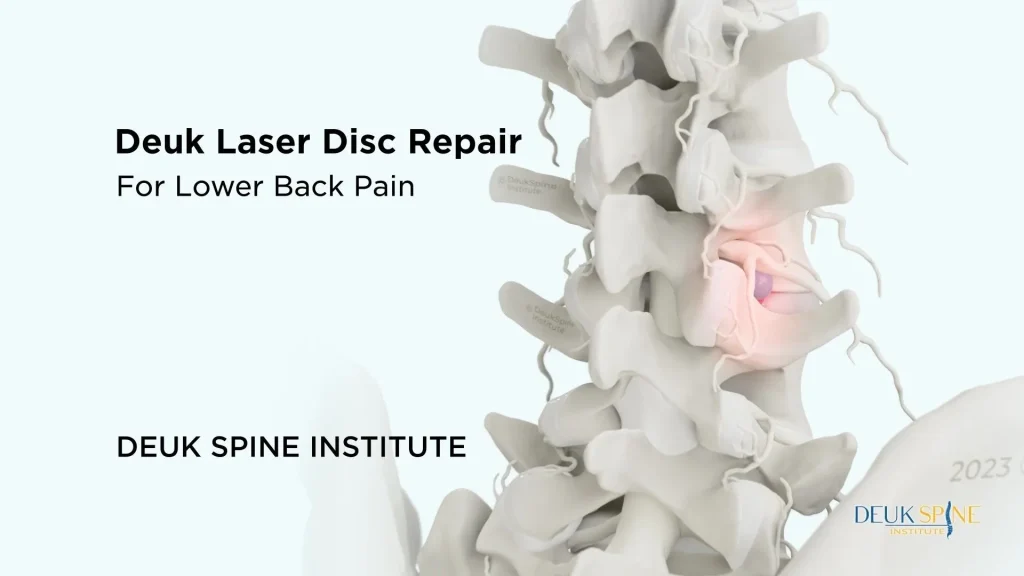
Hospital stay: Same-day discharge (outpatient)
Recovery timeline:
- Immediate relief from nerve compression
- Return to desk work: 3-10 days
- Return to physical work: 4-6 weeks
- Full recovery: 5-7 months
- No hardware to heal around
- No fusion restrictions
- Natural disc preserved
Advantages:
- Fastest recovery
- No permanent loss of motion
- No adjacent segment disease risk
- Can return to all activities, including contact sports, after healing
Factors That Affect Recovery
Beyond the specific surgical procedure, several patient and surgical factors significantly influence recovery time and outcomes.
Age
Younger patients generally recover faster and more completely than older patients. However, a 2024 study of 507 patients who underwent ACDF for degenerative cervical myelopathy found that elderly patients (over 70) still improved across all outcome measures, though they had a lower magnitude of improvement and a higher risk of early complications compared to younger patients.21
The good news: age alone should not disqualify you from surgery if you’re otherwise healthy.
Overall Health Status
Factors that slow recovery:
- Obesity: Excess weight increases mechanical stress on healing structures
- Smoking: Dramatically impairs bone healing and fusion rates; also increases infection risk
- Diabetes: Poorly controlled diabetes impairs wound healing and increases infection risk
- Chronic conditions: Heart disease, lung disease, and other systemic conditions can complicate recovery
- Poor nutrition: Adequate protein and vitamins are essential for tissue healing
Factors that optimize recovery:
- Regular physical activity before surgery
- Healthy body weight
- Good nutritional status
- Non-smoking
- Well-controlled chronic medical conditions
Severity of Preoperative Condition
The baseline severity of your condition influences recovery:
Better prognosis:
- Short duration of symptoms (less than 6 months)
- Mild to moderate neurological deficits
- Good preoperative function
- Single-level pathology
More challenging recovery:
- Long duration of symptoms (over 1 year)
- Severe weakness or numbness
- Preoperative disability
- Multilevel disease
- Presence of myelopathy
A 2024 study found that baseline myelopathy severity directly influenced the magnitude of improvement following surgery, though patients at all severity levels improved.21
Surgical Complexity
Single-level surgery generally has a faster recovery than multilevel procedures.
Revision surgery (surgery after previous neck surgery) typically involves:
- More complex anatomy due to scar tissue
- Longer operative time
- Higher complication rates
- Slower recovery
Psychological Factors
Mental health can significantly impact surgical outcomes:
- Depression and anxiety are associated with poorer pain outcomes
- Pain catastrophizing (excessive worry about pain) predicts worse results
- Positive expectations and active coping strategies improve outcomes
- Litigation or disability claims are associated with worse outcomes across all treatment types
Postoperative Compliance
Following your surgeon’s instructions dramatically affects outcomes:
- Attending physical therapy sessions
- Following activity restrictions
- Taking medications as prescribed
- Not smoking during the healing period
- Gradually progressing activities as directed
Optimizing Your Recovery
While some factors affecting recovery are beyond your control, you can take specific actions to optimize your outcome.
Before Surgery (Prehabilitation)
Physical preparation:
- Stay as active as pain allows
- Perform gentle neck and shoulder range of motion exercises
- Strengthen core and shoulder blade muscles
- Maintain cardiovascular fitness with activities like walking
Medical optimization:
- Control blood sugar if diabetic
- Optimize blood pressure
- Stop smoking at least 4 weeks before surgery (ideally longer)
- Lose weight if overweight
- Review medications with your surgeon (some may need adjustment)
Mental preparation:
- Educate yourself about the procedure
- Set realistic expectations
- Practice stress-reduction techniques
- Arrange for help during recovery
- Plan modifications to your home and work
Immediate Postoperative Period (First 2 Weeks)
Pain management:
- Take prescribed pain medications as directed
- Use ice packs for incision site pain (15-20 minutes every 2-3 hours)
- Sleep with your head elevated on pillows
- Avoid sudden movements that jar your neck
Activity:
- Walk regularly (start with 5-10 minutes, gradually increase)
- Avoid lifting anything over 5-10 pounds
- No driving while on narcotic pain medication
- No bending, twisting, or reaching overhead
- Frequent position changes to prevent stiffness
Wound care:
- Keep the incision clean and dry
- Follow specific wound care instructions from your surgeon
- Watch for signs of infection (increased redness, swelling, drainage, fever)
Nutrition and hydration:
- Eat a balanced diet rich in protein for healing
- Stay well-hydrated (water reduces inflammation)
- Avoid alcohol, which impairs healing
- Consider supplements: Vitamin D, Calcium (if recommended)
Subacute Recovery (Weeks 2-8)
Physical therapy:
- Begin formal physical therapy when cleared by your surgeon
- Focus on restoring the range of motion
- Progressive strengthening of neck and shoulder blade muscles
- Postural training
- Nerve gliding exercises to prevent scar tissue
A 2024 narrative review on rehabilitation after cervical spine surgery emphasized that cervical rehabilitation plays a crucial role in optimal recovery, though there is no universal agreement on the ideal program.22
Gradual return to activities:
- Light household chores
- Desk work (if cleared)
- Driving (after narcotic medications stopped and neck motion adequate)
- Avoid high-impact activities
- Listen to your body. Some discomfort is normal, but sharp pain is a warning
Managing expectations:
- Arm pain typically improves before neck pain
- Some numbness may persist for weeks to months as nerves heal
- Fatigue is common; rest when needed
- Recovery is not always linear; you may have good days and bad days
Long-Term Recovery (2-6 Months and Beyond)
Continued strengthening:
- Progressive resistance training for neck and upper back
- Core strengthening to support the spine
- Maintain flexibility with regular stretching
- Consider activities like swimming or yoga (when cleared)
Ergonomic modifications:
- Workstation setup to minimize neck strain
- Proper sleeping positions and pillow support
- Lifting techniques that protect your neck
- Frequent breaks from sustained positions
Lifestyle factors:
- Maintain a healthy body weight
- Continue regular exercise
- Manage stress
- Avoid smoking
- Get adequate sleep
Managing Surgical Anxiety
It’s completely normal to feel anxious before neck surgery. The cervical spine is a delicate area, and concerns about outcomes, complications, and recovery are understandable.
Common Fears and Realistic Perspectives
Fear: “What if I wake up paralyzed?”
Reality: With modern surgical techniques and monitoring, the risk of serious neurological complications is very low (less than 0.5% for most procedures). Surgeons use neuromonitoring during surgery to continuously check nerve and spinal cord function.
Fear: “What if the surgery doesn’t help or makes things worse?”
Reality: Success rates for properly selected patients range from 85% to 95% in relieving arm pain. While no surgery is 100% guaranteed, proper diagnosis and appropriate procedure selection maximize your chances of improvement.
Fear: “What if I can’t function normally again?”
Reality: Most patients return to all normal activities, including sports and physically demanding work, after appropriate healing time. The goal of surgery is to improve your function, not limit it.
Fear: “What about all the things that could go wrong?”
Reality: While complications can occur, they are relatively uncommon with experienced surgeons. Common complications, such as difficulty swallowing or hoarseness after anterior approaches, typically resolve within weeks.
Strategies to Reduce Anxiety
Education and preparation:
- Learn exactly what will happen before, during, and after surgery
- Write down questions and discuss them with your surgeon
- Tour the surgical facility if possible
- Understand the recovery timeline
Social support:
- Share your concerns with family and friends
- Join online support groups for others who’ve had similar surgery
- Consider counseling if anxiety is severe
- Arrange for someone to stay with you initially after surgery
Mind-body techniques:
- Practice deep breathing exercises
- Try progressive muscle relaxation
- Consider meditation or mindfulness
- Listen to calming music
Practical preparation:
- Arrange time off work
- Prepare your home for recovery
- Stock up on easy-to-prepare meals
- Set up a comfortable recovery space
- Complete any necessary paperwork
The day before surgery:
- Follow all preoperative instructions carefully
- Get a good night’s sleep
- Avoid alcohol
- Pack your bag with comfortable clothing
- Remind yourself why you chose surgery: to improve your quality of life
Trust your surgical team: Remember that your surgeon has performed this procedure many times successfully. They have extensive training and experience to handle any situation that may arise.

Post-Surgery Care Guidelines
Proper post-surgical care is essential for optimal recovery. Here are detailed guidelines for caring for yourself after C5-C6-C7 neck surgery.
Incision Care
For anterior (front of neck) incisions:
- Keep the incision clean and dry for the first 48 hours
- You may shower after 48 hours unless instructed otherwise
- Pat the area dry gently—do not rub
- Do not apply lotions, creams, or ointments unless prescribed
- Steri-strips (if used) will fall off on their own in 7-10 days
- Watch for signs of infection: increased redness, swelling, warmth, drainage, or fever over 101°F
For posterior (back of neck) incisions:
- Similar care, though these may be more difficult to see and clean
- Have someone help check the incision daily
- Avoid shampoo running directly over the incision for the first week
Once the incision closes, the scar keeps changing for 12 to 18 months, and how spine surgery scars look and fade depends partly on whether the incision was made in the front or back of the neck.
Note: DLDR® produces a very small incision, requiring a lower level of care.
Activity Restrictions
For traditional surgeries and some minimally invasive surgeries:
DO NOT:
- Lift anything over 5-10 pounds for the first 6 weeks (the weight of a gallon of milk)
- Bend at the waist to pick things up—squat instead
- Twist or rotate your neck forcefully
- Drive while taking narcotic pain medication
- Engage in high-impact activities for at least 3 months
- Smoke (ever, but especially during healing)
- Reach overhead repetitively
DO:
- Walk regularly, starting with short distances and gradually increasing
- Change positions frequently to prevent stiffness
- Sleep with your head elevated on pillows
- Use proper body mechanics for all activities
- Follow your surgeon’s specific restrictions
Pain Management
Medications:
- Take pain medications as prescribed, not just when pain is severe
- Set alarms to take medications on schedule initially
- Wean off narcotics as soon as possible to prevent dependence
- Transition to over-the-counter medications like acetaminophen or ibuprofen when appropriate
- Never mix narcotics with alcohol
Non-medication approaches:
- Ice packs for 15-20 minutes every 2-3 hours (particularly helpful in the first week)
- Gentle neck stretches when cleared by your surgeon
- Relaxation techniques
- Proper positioning to minimize strain
Nutrition for Healing
Your body needs optimal nutrition to heal properly:
- Protein: Essential for tissue repair—aim for lean meats, fish, eggs, beans, Greek yogurt
- Vitamin C: Supports collagen formation—citrus fruits, berries, bell peppers
- Vitamin D and Calcium: Critical for bone healing if you had fusion—dairy, fortified foods, supplements if recommended
- Zinc: Aids wound healing—meat, shellfish, legumes, seeds
- Hydration: Drink at least 8 glasses of water daily to reduce inflammation
Foods to limit:
- Excessive sugar (impairs immune function)
- Processed foods (promote inflammation)
- Alcohol (impairs healing)
When to Contact Your Surgeon
Call your surgeon immediately if you experience:
Neurological red flags:
- New or worsening weakness in arms or legs
- Loss of coordination or balance
- Numbness or tingling that’s new or significantly worse
- Difficulty with bowel or bladder control
Surgical complications:
- Fever over 101°F
- Increasing redness, swelling, or drainage from the incision
- Separation of wound edges
- Severe, uncontrolled pain despite medications
Other concerning symptoms:
- Difficulty swallowing or breathing
- Persistent hoarseness lasting more than 2 weeks
- Severe headache, different from your usual pattern
- Chest pain or shortness of breathç
These same signs can also show up on a follow-up MRI as a finding called cord signal change or myelomalacia. If your report uses either term, see our guide to what that finding means for your recovery before assuming the worst.
Getting a Second Opinion
Not all surgeons offer the same procedures or have the same philosophy about treatment. Seeking a second opinion is appropriate and often prudent, especially if:
Red Flags That Warrant a Second Opinion
You’re being offered fusion as the only option for a single-level herniated disc without evidence of instability. Modern endoscopic techniques can often address the problem without the need for fusion.
The surgeon can’t clearly explain what’s causing your pain or how the proposed surgery will help. If your imaging doesn’t correlate with your symptoms, more evaluation is needed.
You’re recommended for multilevel fusion based solely on imaging findings, without a clear clinical correlation. Many MRI findings are age-appropriate changes that don’t require surgery.
The surgeon dismisses your concerns or rushes you into making a decision. You should feel heard and have all your questions answered.
The surgeon doesn’t discuss non-surgical options or explain what conservative treatments you should try first (except in cases of emergency like myelopathy).
Your symptoms don’t match the diagnosis. If you have primarily neck pain but are being told you need surgery for nerve compression, something doesn’t add up.
You discover concerning information about the surgeon’s track record, credentials, or patient outcomes.
What a Second Opinion Should Include
A thorough second opinion consultation should provide:
- Detailed review of your imaging by the surgeon (not just a resident or physician assistant)
- Comprehensive physical examination, including neurological testing
- Clear explanation of what’s causing your symptoms
- Discussion of ALL treatment options, including conservative care, minimally invasive procedures, and traditional surgery
- Realistic expectations about outcomes and recovery
- Surgeon’s personal experience with the recommended procedure
- Opportunity to ask questions without feeling rushed
Getting a Second Opinion at Deuk Spine Institute
We offer free virtual consultations and MRI reviews for patients considering neck surgery. Dr. Ara Deukmedjian, MD, personally reviews your imaging and medical history to determine:
- Whether your symptoms match your imaging findings
- If you’re a candidate for minimally invasive endoscopic surgery
- What conservative treatments might still be appropriate
- Realistic expectations for improvement with various treatment options
Many patients discover they have options beyond fusion that their initial surgeon never mentioned. Schedule your free virtual consultation and MRI review to explore all your treatment options.

Frequently Asked Questions
Key Takeaways
Understanding Your Condition
- The C5-C6 and C6-C7 levels are the most commonly affected cervical spine segments, accounting for the majority of disc herniations
- Surgery is typically necessary only after conservative treatment fails or in cases of progressive neurological deficits or myelopathy
- Proper diagnosis requires correlation between imaging findings and clinical symptoms; not all MRI abnormalities require surgery
Evaluating Surgical Options
- Traditional ACDF fusion effectively relieves arm pain in 90%+ of cases but carries an 11-21% risk of adjacent segment disease requiring future surgery
- Adjacent segment disease occurs because fusion eliminates motion at the treated level, transferring increased stress to adjacent discs
- Modern minimally invasive endoscopic procedures can address many disc problems without fusion, preserving natural motion and eliminating adjacent segment disease risk
- Motion-preserving techniques like artificial disc replacement show promise but have mixed long-term results
Recovery Expectations
- Recovery time varies significantly by procedure type: ACDF requires 3-6 months for complete recovery, while minimally invasive endoscopic procedures allow return to normal activities in 6-8 weeks
- Arm pain typically improves faster than neck pain, often showing dramatic improvement within days to weeks
- Numbness and weakness take longer to resolve (weeks to months) as compressed nerves gradually recover
- Factors affecting recovery include age, overall health, smoking status, psychological factors, and compliance with postoperative instructions
Optimizing Outcomes
- Prehabilitation (preparing your body before surgery) improves outcomes
- Following postoperative instructions, attending physical therapy, and gradually progressing activities are critical
- Maintaining proper nutrition, staying hydrated, and avoiding smoking support optimal healing
- Managing expectations and psychological factors significantly influence satisfaction with results
Making Informed Decisions
- Not all surgeons offer the same procedures; seeking a second opinion is appropriate, especially if fusion is presented as your only option
- Ask specific questions about your surgeon’s experience, complication rates, and personal outcomes with the recommended procedure
- Understand what you’re accepting with fusion: permanent loss of motion and significant risk of adjacent segment disease
- Consider whether motion-preserving alternatives might be appropriate for your specific condition
When to Seek Expert Evaluation
If you’re facing neck surgery, particularly if fusion has been recommended, consider seeking evaluation from a surgeon who specializes in motion-preserving techniques. At Deuk Spine Institute, we offer free virtual consultations and MRI reviews to help you understand all your treatment options. Many patients discover they have alternatives to fusion that preserve their natural spine motion while effectively relieving pain.
How Deuk Laser Disc Repair® Works
Watch this short video to understand how the Deuk Laser Disc Repair® procedure works.
About the Author
Dr. Ara Deukmedjian, MD, is a board-certified neurosurgeon specializing in minimally invasive endoscopic spine surgery. He completed his neurosurgery residency at the University of Florida and has performed thousands of endoscopic spine procedures. Dr. Deukmedjian has pioneered motion-preserving disc surgery techniques and has published extensively on advanced endoscopic spine surgery in peer-reviewed journals. He serves as the Medical Director of Deuk Spine Institute in Melbourne, Florida, where his approach emphasizes preserving natural spinal structures and motion whenever possible while achieving excellent patient outcomes.
Medical review process: This article was written by Dr. Deukmedjian based on current peer-reviewed medical literature, clinical practice guidelines, and 15+ years of clinical experience treating cervical spine conditions. Information is updated regularly to reflect the latest evidence-based treatment approaches and surgical techniques.
-
How long will I be in the hospital after C5-C6-C7 surgery?
Hospital stay varies by procedure. ACDF typically requires 1-2 days, though some patients go home the same day. Minimally invasive endoscopic procedures like Deuk Laser Disc Repair® are outpatient procedures with same-day discharge. Your overall health, pain control, and ability to eat and walk determine readiness for discharge.
-
Will I need to wear a neck brace after surgery?
This depends on your surgeon and the specific procedure. After ACDF, some surgeons require a collar for 2-6 weeks, while others don’t use collars at all. Research shows that collar use after single-level ACDF may not be necessary for fusion success. Minimally invasive procedures typically don’t require collar use. Follow your specific surgeon’s recommendations.
-
When can I return to work?
Return to work depends on your job requirements and the surgical procedure:
- Desk work after minimally invasive surgery: 2-14 days
- Desk work after ACDF: 4-6 weeks
- Physical labor after minimally invasive surgery: 4-6 weeks
- Physical labor after ACDF: 3-6 months
Always get specific clearance from your surgeon before returning to work, especially for physically demanding jobs.
-
Will I be able to turn my head normally after surgery?
After motion-preserving procedures (posterior foraminotomy, endoscopic discectomy, artificial disc replacement), you should retain a normal or near-normal range of motion. After ACDF, you’ll lose motion at the fused segment. For a single-level fusion, most people don’t notice a significant functional limitation because adjacent levels compensate. However, multilevel fusions cause more noticeable restriction.
-
What are the chances my surgery won’t work?
Success rates for properly selected patients are encouraging. For arm pain from nerve compression, surgery provides significant relief in 85-95% of cases. However, neck pain relief is less predictable, with success rates around 70-80%. Minimally invasive endoscopic approaches at Deuk Spine Institute have documented neck pain relief success rates exceeding 99% in our patient series.
-
Can my herniated disc come back after surgery?
Re-herniation at the same level is possible but uncommon:
- After ACDF: Extremely rare since the entire disc is removed
- After partial discectomy: 5-10% risk within 5 years
- After Deuk Laser Disc Repair®: Less than 1% because the inflammatory herniated material is removed and the disc allowed to heal, preventing re-herniation
The more significant concern after fusion is adjacent segment disease, which affects 11-21% of patients.
-
How soon after surgery will my arm pain improve?
Many patients experience immediate or near-immediate relief of arm pain after nerve decompression. However, if the nerve was severely compressed for a long time, recovery may be gradual over weeks to months. Numbness and tingling typically resolve more slowly than pain. Weakness can take 3-6 months to fully recover as the nerve regenerates.
-
Will I need pain medication long-term after surgery?
Most patients wean off pain medication within 2-6 weeks after surgery. If you required narcotics before surgery, the goal is to eliminate or significantly reduce your need for them postoperatively. If you’re still requiring significant pain medication 3 months after surgery, further evaluation is needed, as this may indicate incomplete resolution of the problem.
-
Can I prevent the need for neck surgery in the future?
While you can’t prevent all degenerative changes (aging affects everyone), you can reduce your risk:
- Maintain good posture, especially at computer workstations
- Avoid prolonged forward head posture and “tech neck”
- Strengthen neck and shoulder blade muscles
- Maintain a healthy weight
- Don’t smoke
- Stay physically active
- Use proper ergonomics at work
- Address spine problems early before they worsen
If you’ve had single-level surgery, following these guidelines is especially important to prevent adjacent segment disease.
-
What if my surgeon says fusion is my only option?
If you’re being told fusion is your only option for a herniated disc without clear instability, you should seek a second opinion. Modern endoscopic techniques can address many disc problems without fusion. At Deuk Spine Institute, we’ve successfully treated thousands of patients with herniated discs using motion-preserving techniques who were told they needed fusion.
-
Is neck surgery safe for older adults?
Age alone shouldn’t disqualify you from surgery if you’re otherwise healthy. A 2024 study found that patients over 70 who underwent ACDF for myelopathy still improved significantly, though they had slightly higher complication rates and a smaller magnitude of improvement compared to younger patients. The key is appropriate patient selection and medical optimization before surgery.21
Sources
1: https://www.sciencedirect.com/science/article/abs/pii/S1878875023017710
2: https://deukspine.com/blog/c6-c7-disc-herniation
3: https://www.nature.com/articles/s41598-024-69843-0
4: https://deukspine.com/blog/cervical-myelopathy-causes-symptoms-treatments
5: https://deukspine.com/blog/c6-c7-disc-herniation
6: https://pubmed.ncbi.nlm.nih.gov/40956104/
7: https://deukspine.com/blog/herniated-disc-c4-c5
8: https://deukspine.com/blog/herniated-disc-c5-c6
9: https://deukspine.com/blog/c6-c7-disc-herniation-symptoms
10: https://my.clevelandclinic.org/health/procedures/acdf-surgery
11: https://pmc.ncbi.nlm.nih.gov/articles/PMC3963057/
12: https://www.sciencedirect.com/science/article/abs/pii/S1878875023017710
13: https://journals.sagepub.com/doi/10.1177/21925682241237500
14: https://www.nassopenaccess.org/article/S2666-5484(23)00107-5/fulltext
16: https://pubmed.ncbi.nlm.nih.gov/38469858/
17: https://pubmed.ncbi.nlm.nih.gov/37421142/
18: https://pmc.ncbi.nlm.nih.gov/articles/PMC11605282/
19: https://pubmed.ncbi.nlm.nih.gov/38141106/
20: https://assets.cureus.com/uploads/original_article/pdf/324313/20250302-724728-7f352i.pdf
21: https://www.sciencedirect.com/science/article/abs/pii/S1878875024012191